Tired on your period? Iron and ferritin explained
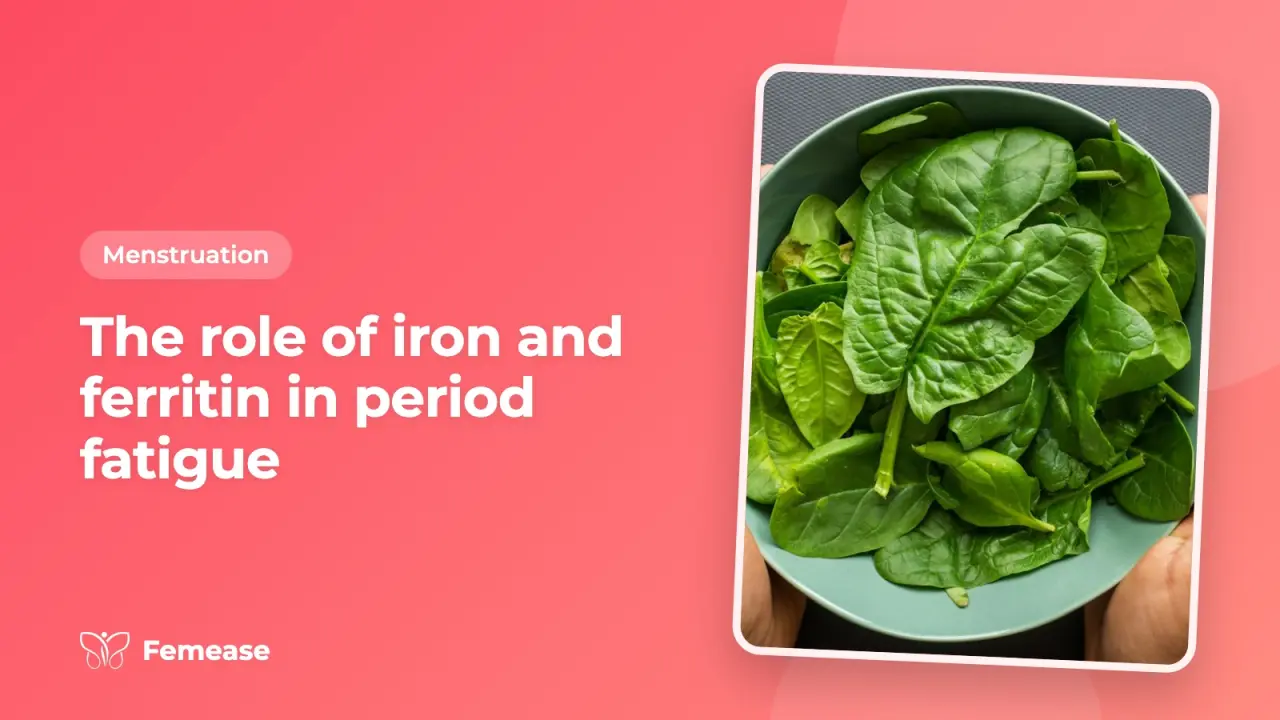
In short: Ferritin is the protein that stores iron in your body. Every period, you lose blood and some iron with it, so your iron stores can slowly go down, especially if your periods are heavy. Low ferritin can make you feel very tired, foggy and breathless even when your haemoglobin looks normal. If you often feel drained around your periods, or your periods are heavy, see a doctor and ask whether a ferritin test is needed.
Let us be honest, period fatigue is real. It is not just in your head. If you have ever felt completely wiped out during your period, despite eating well, you are not alone. And it is not always about your haemoglobin; it is also about your iron stores. That is where ferritin steps into the spotlight.
What is period fatigue?
That wave of exhaustion that crashes over you before or during your period? That is period fatigue. For many women and menstruators, it is more than feeling "a little tired." It is mental fog, heaviness in the body, a lack of motivation, and even simple tasks feel overwhelming.
While hormones like estrogen and progesterone play a part, low iron levels, particularly low ferritin, could be a bigger culprit than you think.
Iron vs. ferritin – what is the difference?
Most people think of iron as one single nutrient, but there are layers to it:
- Iron is the mineral your body uses to make hemoglobin, the protein in red blood cells that carries oxygen.
- Ferritin is a protein that stores iron in your body. Think of it like your iron savings account.
Low ferritin does not always show up in a standard iron or hemoglobin blood test. That means you could be technically within range, but still feel drained, dizzy, or like you are running on empty.
Why does iron drop during your period?
Every month, your body sheds blood. If your periods are heavy (medically called menorrhagia), you could be losing more iron each cycle than your body can easily replace. That is a big deal, especially if your ferritin stores are already low.
Even if you are eating iron-rich foods, your body may not be able to replenish what it is losing fast enough.
Here is the catch: Iron absorption is tricky
Eating iron-rich foods is the first step, but absorption matters too.
Your iron absorption depends on:
- Your gut health: Conditions like IBS or low stomach acid can interfere with absorption.
- What you eat: Calcium-rich foods, coffee, and tea can block iron absorption. On the flip side, vitamin C helps.
Ferritin and fatigue
Even borderline low ferritin can cause symptoms like:
- Chronic fatigue
- Brain fog
- Hair thinning
- Breathlessness
- Restless legs
But many doctors do not check ferritin unless asked. If your hemoglobin is normal, your fatigue may be brushed off.
Reality check: You can have "normal" iron levels and still have low ferritin, leading to poor oxygen delivery and low energy.
So, what can you do?
Get tested properly. Ask for a ferritin test along with your CBC. Your doctor will explain what your result means for you.
Optimize absorption. Have iron-rich foods with vitamin C foods, and keep tea, coffee and calcium-rich foods away from those meals. Ask your doctor whether you need a supplement.
Treat the root cause. If you experience heavy periods, consult your gynecologist. Your doctor can suggest the right treatment, and many women also turn to traditional Ayurvedic and holistic approaches to support their iron levels, alongside, not instead of, their gynaecologist's care.
Focus on iron-rich foods. Include lentils, spinach, dates, pumpkin seeds, beets, and jaggery in your daily diet. Pair with vitamin C-rich fruits like amla, lemon, or oranges.
Heal your gut. If you struggle with bloating, constipation, or gut sensitivity, improving gut health can significantly enhance your nutrient absorption, including iron.
Questions women ask
Does ferritin decrease during your period?
Your period uses up some of your stored iron, because blood carries iron. With normal periods and a good diet, the body usually keeps up. With heavy periods, ferritin can fall a little every cycle and stay low over time.
What is the difference between iron and ferritin?
Iron is the mineral your body uses to make haemoglobin, which carries oxygen in your blood. Ferritin is how your body stores iron, like a savings account. Your stores can be low even before your haemoglobin drops.
What are the signs of low ferritin?
Common signs are tiredness that does not go away, brain fog, hair thinning, breathlessness, dizziness and restless legs. These can have other causes too, so see a doctor for a proper check rather than guessing.
How can I improve my iron levels with food?
Eat iron-rich foods like dals, spinach, dates, pumpkin seeds, beetroot and jaggery. Have them with vitamin C foods like amla, lemon or oranges, and keep tea and coffee away from meals. Check with a doctor before taking any supplement.
When should I see a doctor about period fatigue?
See a gynaecologist if your periods are heavy, last more than 7 days, or you feel exhausted every month. Go to hospital straight away if you soak a pad every hour, faint, feel very breathless or have chest pain.
General information, not medical advice. Talk to a doctor about your own health.
Talk to a doctor about your periodsFrom the Femease store

For your period
My Cara Ultra-thin Sanitary Pads with Organic Cotton Top Layer (4M+4L+4XL)
12 pads (4 M, 4 L, 4 XL)
199 rupees

For your period
My Cara Ultra-thin Sanitary Pads with Organic Cotton Top Layer (20 Large)
20 Large pads
299 rupees
Keep reading
Iron deficiency due to heavy periods
Tired and dizzy with heavy periods? Learn the signs of iron deficiency anaemia, iron-rich foods to eat, and when to see a doctor for a check.
Hemoglobin low symptoms: signs of anaemia in women and what helps
Tired, breathless or dizzy? The signs of low haemoglobin in women, common causes like heavy periods and pregnancy, iron-rich foods and when to see a doctor.
IVF process explained: steps, IUI vs IVF and what to expect
What IVF means, each step of the IVF process in simple words, how IVF differs from IUI, age limits in India, and caring for your feelings along the way.

Chills or hot flashes during your period? Here's why
Shivering one minute, hot the next? Why hormones, prostaglandins and low iron can change your temperature on your period, and what helps.
The role of magnesium in reducing menstrual cramps
Magnesium for period cramps? Learn how magnesium is linked to cramps, PMS and mood, signs you may be low, and magnesium-rich foods to add to meals.
The role of the liver in hormonal detox during the menstrual cycle
Why supporting your liver might be the missing piece in easing painful periods and mood swings
