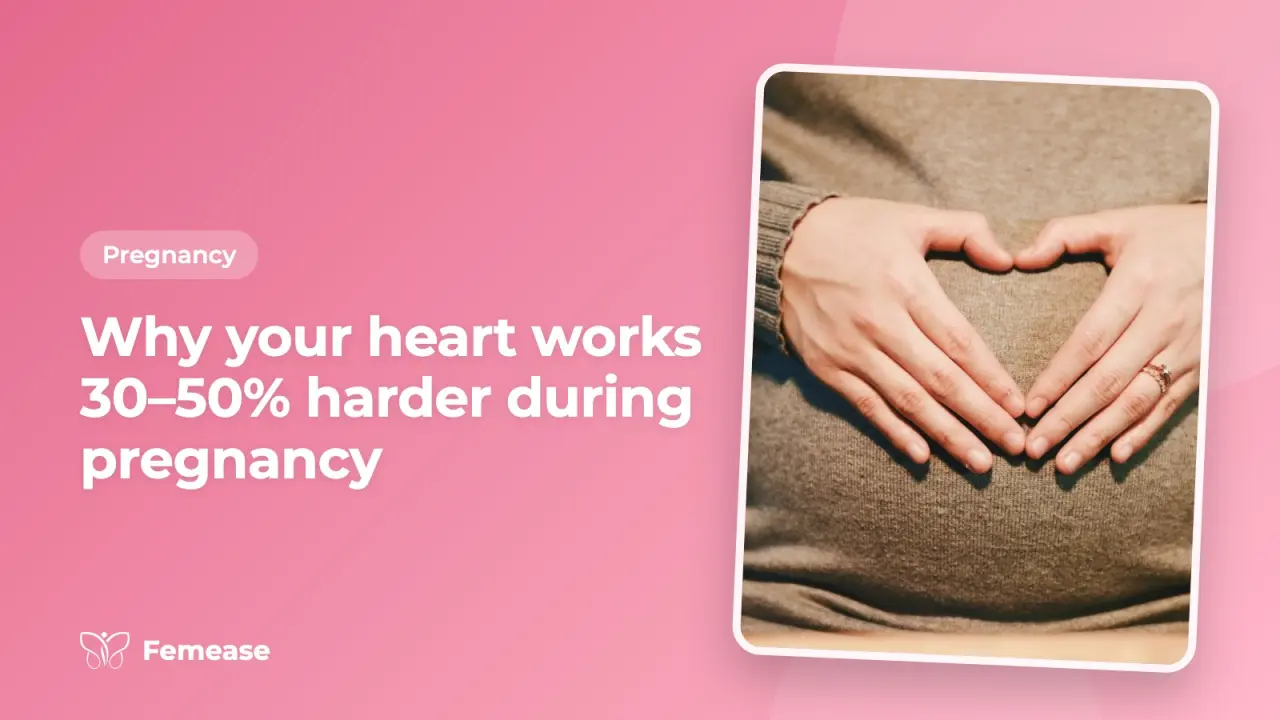
Why your heart works 30–50% harder during pregnancy
In short: During pregnancy your blood volume rises a lot, so your heart pumps more blood with every minute and beats a little faster. That is why a quicker pulse, mild breathlessness, swollen ankles and dizziness on standing up are common. These changes help feed your baby and prepare you for birth. Go to hospital straight away for chest pain or sudden breathlessness, and for a racing heartbeat that will not settle or sudden swelling of the face and hands.
Growing a baby means growing your blood supply, too.
Pregnancy is nothing short of a physiological marvel. As your baby grows, so does your blood volume by nearly 30 to 50%. That is a huge change! And your heart? It steps up, beating harder and faster to pump all that extra blood. This increase is not just about numbers; it is a sign of how your entire body is adjusting to support the life growing inside you.
What happens to your blood during pregnancy?
By the end of your pregnancy, your body has around 1.5 liters (about 40–50%) more blood than before. This increase starts as early as the first trimester and continues to build through your second and third trimesters.
Why the surge?
- To nourish the placenta and growing baby
- To support your expanding uterus
- To prepare for blood loss during delivery
- To keep your organs and tissues oxygenated
More blood means your heart needs to pump more frequently and with greater force. That is why many pregnant women notice a faster heartbeat and mild shortness of breath, especially during physical activity or when lying flat.
Your heart’s response: Working overtime with a purpose
Your heart rate can go up by 10–20 beats per minute. This is not something to worry about, it is your body adapting beautifully.
Here is what changes:
- Cardiac output (the amount of blood your heart pumps per minute) increases by 30–50%.
- Your blood vessels widen (a process called vasodilation), helping blood flow more easily to your uterus and kidneys.
- Hormones like progesterone relax your blood vessel walls, allowing this expansion.
All these changes mean your circulatory system is in high gear, but it’s also super smart, balancing the needs of both you and your baby.
What does this feel like for you?
You might not "feel" the extra blood coursing through your veins, but you may notice:
- Mild swelling in feet and ankles (especially later in the day)
- Faster breathing or heart rate, even at rest
- Warmth or slight flushing
- Occasional dizziness if you get up too quickly
These symptoms are usually normal. But always talk to your doctor if something feels off, especially with swelling or breathing. Chest pain needs hospital care straight away.
How to support your circulatory system during pregnancy
Stay Hydrated: Fluids support blood volume and circulation.
Eat Iron-Rich Foods: Think leafy greens, lentils, dates, and fortified cereals to help make healthy red blood cells.
Get Moderate Exercise: Walks, prenatal yoga, and swimming can keep your blood flowing.
Elevate Your Feet: Especially if swelling is bothering you.
Sleep on Your Side (preferably left): This keeps blood flowing to your baby and kidneys.
When to talk to your doctor
If you experience:
- Severe swelling in hands, face, or around the eyes
- Sudden shortness of breath or racing heartbeat
- Chest pain
- Blurry vision or headaches
These can be signs of pregnancy-related complications like preeclampsia or gestational hypertension, and they need medical attention right away: go to hospital straight away.
Pregnancy demands a lot from your body, and your cardiovascular system steps up like a true hero. While your heart works 30–50% harder, it is all for a life-affirming purpose, to ensure that both you and your baby are well-nourished, safe, and supported.
So, the next time you feel your heart flutter or notice your breath quicken, take a moment to marvel at what your body is doing. You are not just growing a baby; you are transforming your entire internal system to make room for new life.
Questions women ask
Is a faster heart rate normal in pregnancy?
Yes. Your heart rate can go up by about 10 to 20 beats a minute because your heart is pumping more blood for you and your baby. A slightly faster pulse at rest is usually normal. A heartbeat that races, pounds for long or comes with chest pain or fainting needs hospital care straight away.
How much does blood volume increase in pregnancy?
Your blood volume rises steadily from the first trimester and is roughly 30 to 50 percent higher by the end of pregnancy. This extra blood feeds the placenta and baby, supports the growing uterus and prepares you for blood loss at delivery. Iron-rich foods help your body make healthy red blood cells.
What causes palpitations in pregnancy?
Extra blood, a faster heartbeat, hormones, anxiety, too little water or low iron can make you aware of your heartbeat. Short, occasional palpitations are usually harmless. Tell your doctor if they are frequent, last long or come with dizziness, and go to hospital straight away if they come with fainting, chest pain or breathlessness.
Why do I feel breathless during pregnancy?
Early on, pregnancy hormones make you breathe more deeply. Later, the growing uterus presses up under your lungs. Mild breathlessness when climbing stairs or lying flat is common. Sudden or severe breathlessness, especially with chest pain, a cough with blood or a racing heart, needs emergency care.
Which heart and circulation symptoms in pregnancy are an emergency?
Go to the hospital straight away for chest pain, sudden breathlessness, a racing heartbeat that does not settle, fainting, severe headache or blurred vision, or sudden swelling of the face, hands or around the eyes. These can be signs of preeclampsia or another serious problem.
General information, not medical advice. Talk to a doctor about your own health.
Talk to a doctor about your pregnancyKeep reading in the Femease app
Save articles, track your cycle or pregnancy, and talk to a doctor when you need one.
Keep reading

How pregnancy affects your heart
Understanding cardiovascular changes and the rising risk of maternal heart disease
Heart health risks post menopause
Heart disease after menopause? Learn why heart risk rises after menopause, symptoms women should not ignore, and everyday steps to protect your heart.

Does prenatal stress alter a baby’s brain development?
Understanding the impact of stress during pregnancy and how to protect your baby’s growing mind

Why tracking your resting heart rate could help you spot illness early
Spot the warning signs days before symptoms hit, your heart rate might be your body’s quietest health alarm.

The truth about pregnancy after 40 weeks
Understanding late-term pregnancy, what is normal, what is not, and how to navigate the final stretch with confidence

Pregnancy skin surprises you didn’t see coming
From melasma to skin tags, here’s what’s normal, what’s not, and how to care for your changing skin.
