Can travel or flying delay your period?
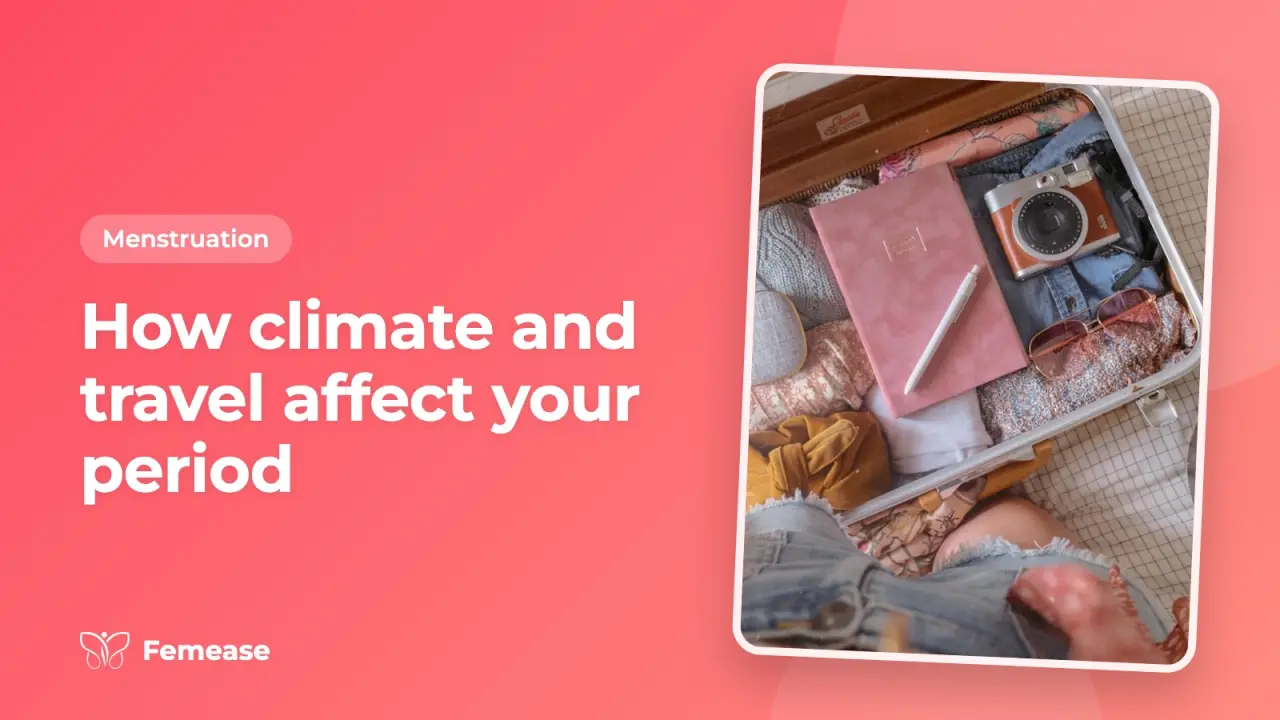
In short: Yes, traveling can affect your period. It's not the plane or the train itself: it's the stress, broken sleep, changed meals and new routine that come with travel, which can shift your menstrual cycle by delaying ovulation and making your period come a few days late or early. Weather has a much smaller effect than most people think. A one-off late period after a trip is usually nothing to worry about, but if you might be pregnant, take a test, and if you miss three periods in a row, see a doctor.
Here's what's going on, and how to plan your trips around your cycle.
How travel can change your period
Your cycle is run by hormones from your brain and ovaries. The brain area that controls them also responds to stress, sleep and energy. That's why changes in your daily life can shift the timing of ovulation, and so the timing of your next period.
The NHS lists these common causes of late or missed periods, and travel can bring several of them at once:
- Stress. Even happy stress counts: a wedding in the family, a new job in a new city, exams, a long-awaited holiday.
- Big changes in weight or food. Skipping meals on the road, eating very differently, or losing weight quickly.
- Doing a lot more exercise than usual. A trekking trip or long days of walking.
Keep in mind that a period usually changes because ovulation changes. If travel stress pushes ovulation a few days later, your period will usually come a few days later too. (Bleeding can sometimes happen without ovulation as well; here's more on whether you can have a period without ovulating.)
Jet lag, night shifts and your body clock
Your body clock helps time sleep, hunger and many hormones. The NHS describes jet lag as a disturbed sleep pattern after a long flight, which usually settles within a few days as your body adjusts.
Many women in India deal with the same disruption without leaving the country: night shifts in hospitals, call centres or IT teams that work US hours, long overnight train or bus journeys, or flying to the Gulf or abroad for work.
What helps your body clock (and your cycle) settle, based on NHS jet lag advice:
- drink water during the journey and keep caffeine and alcohol low
- switch to the new time zone's sleep times as soon as you can
- go outside in daylight once you arrive, as light helps your body clock adjust
- avoid long daytime naps; sleep at night
If you travel often or work rotating shifts, your periods may be less regular. That's worth tracking and mentioning to your doctor.
Does weather affect your period?
This is a very common question, and the honest answer is: a little, but less than people think.
The best study we found followed 129 women in Novosibirsk, Russia, a city with very long winters. It found that in summer, cycles were slightly shorter than in winter (by under one day on average), and women were more likely to ovulate in summer (97% of cycles studied) than in winter (71%). More sunshine a few days before ovulation was linked with a shorter cycle. Interestingly, air temperature itself did not predict cycle length.
So for most women in India, where sunshine is plentiful through most of the year, weather alone is unlikely to make a big change in timing. What weather does change is how your period feels. Seasons affect much more than periods, too: see how seasonal changes affect your health more than you think.
Hot and humid weather
In Mumbai, Chennai or Kolkata in May, or anywhere during the monsoon, you may notice:
- more sweating and chafing, and rashes from pads
- feeling more tired, bloated or irritable, partly from poor sleep in the heat
- more thirst; dehydration can make headaches and tiredness worse
What helps: change pads more often than you would in cooler weather, wear loose cotton underwear and clothes, keep drinking water through the day, and keep your bedroom as cool as you can.
Cold weather
In a Delhi or Srinagar winter, or a December trip to the hills, some women find cramps and back pain feel worse, and they move less and spend less time outdoors. Gentle movement and warmth help. The NHS suggests a warm bath, a heat pad or a hot water bottle wrapped in a cloth for period pain, and gentle exercise like walking, yoga or swimming.
Moving to a new city or country
Relocating for studies, marriage or work combines almost everything that can affect a cycle: stress, new food, a different routine, a different climate and often loneliness at first. It's common for the first one or two periods after a move to be a little off.
Give your body a couple of cycles to settle. If your periods are still irregular after that, or they stop, see a doctor.
Your period travel kit
Pack for comfort, not for "fixing" your cycle:
- more pads, tampons or a menstrual cup than you think you'll need, in case your period comes early
- a few small paper or disposal bags; toilets on trains, buses and highways don't always have bins
- wet wipes, a spare pair of underwear and a dark-coloured layer
- a hot water bottle or stick-on heat patch for cramps
- a water bottle and simple snacks so you don't skip meals
- your period tracker, so you can see how your cycle changes after the trip
If you're having any treatment for a health condition, ask your doctor before you leave how to manage it while you travel, especially if you're crossing time zones.
What's normal and what isn't
According to the NHS, the average gap from one period to the next is about 28 days, and periods are irregular if the gap is less than 21 days or more than 35 days. ACOG also says a normal period usually lasts up to 7 days.
After a trip, it's common to see:
- a period that comes a few days early or late
- one cycle that feels different: more cramps, more bloating, lighter or heavier flow
- things back to your usual pattern within one or two cycles
If your periods are often irregular even without travel, you're not alone: irregular periods are a rising concern for Gen Z, and they are worth getting checked.
When to see a doctor
Book a doctor consultation if:
- you might be pregnant and your period is late (take a pregnancy test first)
- you have missed your period 3 times in a row
- your periods have become irregular and stay that way after you're back to your usual routine
- you have bleeding between periods or after sex
- your period lasts longer than 7 days, or you are soaking a pad every 1 to 2 hours
- you have severe period pain that doesn't ease with rest and heat
- you also have weight gain or loss, tiredness, facial hair growth, or very dry or oily skin (these can point to conditions like PCOS or thyroid problems)
If you are travelling and have sudden severe tummy pain, very heavy bleeding (soaking a pad every hour) or fainting, get medical help straight away, wherever you are. If you have a fever, see a doctor the same day. In India, call 112 in an emergency.
Questions women ask
Can traveling delay your period?
Yes. Stress, poor sleep, jet lag and changes in food and routine can delay ovulation, which makes your period come later. It usually settles within one or two cycles. If you could be pregnant, take a test.
Does weather affect periods?
Only a little. A study in Russia found cycles were slightly shorter in summer than winter, by under a day, and linked this to sunshine rather than temperature. Heat and cold change how your period feels more than when it comes.
Can flying make your period come early?
Flying itself isn't known to bring a period on, but the stress and broken sleep around a trip can shift ovulation, so your period may come a little early or late. Pack extra period products just in case.
How late can a period be after travel?
A few days is common. NHS advice is to see a doctor if you have missed your period 3 times in a row, and to take a pregnancy test if you could be pregnant.
Can moving to a new city change my cycle?
It can. A move brings stress, new food, a new routine and sometimes a new climate. It's common for one or two cycles to be off. If things don't settle, see a doctor.
Sources
- NHS: Missed or late periods; Irregular periods; Jet lag; Period pain; Heavy periods
- ACOG: Abnormal uterine bleeding
- Danilenko KV, Sergeeva OY, Verevkin EG. Menstrual cycles are influenced by sunshine. Gynecological Endocrinology, 2011
General information, not medical advice. Talk to a doctor about your own health.
Talk to a doctor about your periodsFrom the Femease store

For your period
My Cara Ultra-thin Sanitary Pads with Organic Cotton Top Layer (4M+4L+4XL)
12 pads (4 M, 4 L, 4 XL)
199 rupees

For your period
My Cara Ultra-thin Sanitary Pads with Organic Cotton Top Layer (20 Large)
20 Large pads
299 rupees
More about menstruation
How to reset your menstrual cycle: habits that help
Irregular after stress, travel or poor sleep? Everyday habits around food, sleep and stress that support a steadier cycle, and when to see a doctor.
Perimenopause in your 30s: how your period can change
Periods changing in your late 30s? Learn the period signs of early perimenopause, other signs women miss, and when to see a gynaecologist for tests.

Chills or hot flashes during your period? Here's why
Shivering one minute, hot the next? Why hormones, prostaglandins and low iron can change your temperature on your period, and what helps.
Missed period but not pregnant: common reasons and what to do
Missed or late period but not pregnant? Learn when to test, common causes like stress, PCOS and thyroid, and the signs that need a doctor the same day.
What a “normal” period looks like with PCOS
Irregular periods with PCOS? Learn what a normal period can look like with PCOS, from missed to light or heavy periods, and when to talk to your doctor.

How gut health affects your cycle
Bloating and mood swings with your period? Learn how your gut and hormones are linked, signs your gut may affect your cycle, and ways to support it.
