How gut health affects your cycle
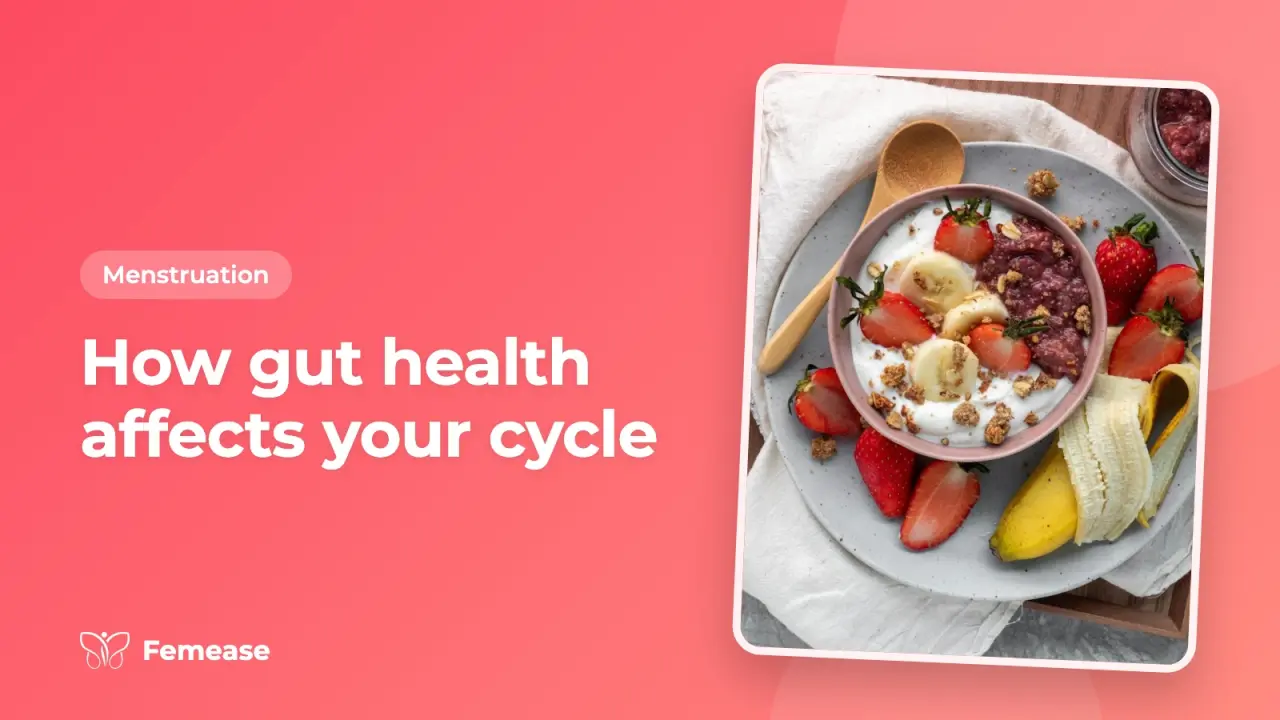
In short: Yes, your gut health can affect your periods. Some gut bacteria help your body clear used oestrogen, and when the gut is out of balance, hormone levels may shift. Stress also travels along the gut-brain link and can delay ovulation. Eating more fibre, fermented foods like curd, drinking water, sleeping well and managing stress all help. If your periods are very irregular, very heavy or very painful, see a gynaecologist.
Ever feel like your period shows up with extra bloating, mood swings, or a totally unpredictable schedule, and you're left wondering, “Is this normal?” Turns out, your gut might have more to do with it than you think.
Let’s dive into how your gut health and your menstrual cycle are secretly besties (or frenemies, depending on what’s going on inside).
Your gut does more than just digest food
We often think of the gut as just the place where food goes in and waste comes out. But inside your gut is a bustling world of trillions of bacteria, collectively called your gut microbiome, that influence everything from immunity to mental health to, yes, your hormones.
Your gut plays a key role in metabolizing estrogen, the primary female sex hormone. It’s all thanks to a specific group of gut bacteria called the estrobolome.
Meet the estrobolome: The hormone whisperer
The estrobolome is a collection of bacteria in your gut that help regulate how much estrogen circulates in your body.
Here's how it works:
Estrogen is produced by your ovaries.
Once it's used, your liver processes it and sends it to your gut to be excreted.
Your gut bacteria decide whether to eliminate it or recycle it back into your system.
When your gut is healthy, this recycling is balanced. But when your gut is out of whack (thanks to stress, poor diet, or lack of fiber), your body may reabsorb too much or too little estrogen. And that’s where hormonal chaos starts.
Gut imbalance = hormonal imbalance
An imbalanced gut can throw your cycle off in all sorts of ways:
Heavy periods or PMS? Might be too much circulating estrogen.
Irregular or missing periods? It could be low estrogen.
Mood swings, acne, or bloating? Estrogen and progesterone are probably not playing nice, and your gut may be to blame.
Even conditions like PCOS, endometriosis, and thyroid issues have strong links to both hormonal and gut health.
Your gut talks to your brain (and your ovaries listen)
Gut health doesn’t just affect your hormones directly. The gut-brain axis, the communication highway between your gut and your brain, also influences your stress levels, which can delay or disrupt ovulation.
So if you’ve ever skipped a period during a stressful time, it's not just a coincidence; it's science.
Signs your gut might be impacting your cycle
Ask yourself:
Do you deal with bloating, gas, constipation, or diarrhoea regularly?
Are your periods irregular, too heavy, or come with intense PMS?
Do you often feel fatigued, moody, or mentally foggy?
If yes, it might be time to look into healing your gut.
How to support gut (and hormonal) harmony
Here are some simple ways to start:
Eat more fibre. It helps eliminate excess estrogen and feeds good gut bacteria. Think fruits, veggies, seeds, and whole grains.
Add fermented foods. Yogurt, kefir, kimchi, sauerkraut, and kombucha can all support a healthy microbiome.
Stay hydrated. Water keeps your gut moving smoothly.
Balance blood sugar. Avoid extreme spikes by eating protein and fat with your carbs. Blood sugar crashes can mess with your hormones too.
Get enough sleep & manage stress. Your gut heals when you rest. Chronic stress = poor gut function = hormonal chaos.
Your menstrual cycle is a monthly report card of your overall health, and your gut is often writing the script.
By taking care of your gut, you're not just helping digestion, you’re supporting smoother periods, better moods, clearer skin, and even future fertility. It’s all connected.
So the next time you’re curled up on the couch with cramps or wondering why your period ghosted you this month, maybe take a look at your gut. It might be trying to tell you something.
Questions women ask
Can gut health affect my periods?
It can. Your gut helps process oestrogen once your body has used it. If the balance of gut bacteria is off, more or less oestrogen may stay in your body, which may show up as heavier periods, stronger PMS or a changed cycle.
What is the estrobolome?
The estrobolome is a group of gut bacteria that helps decide how much oestrogen leaves your body and how much is reused. When your gut is healthy, this balance tends to work smoothly.
What are signs my gut may be affecting my cycle?
Regular bloating, gas, constipation or loose motions, along with irregular or heavy periods, strong PMS, tiredness or brain fog, may point to a link. These signs can have other causes too, so check with a doctor if they keep happening.
How can I improve my gut health for better periods?
Eat more fibre from fruits, vegetables, dals, seeds and whole grains. Add curd, buttermilk or other fermented foods, drink enough water, eat protein with your carbs, sleep well and find ways to lower stress.
When should I see a doctor about gut and period problems?
See a gynaecologist if your periods are missing, very irregular, last more than 7 days or are very painful. See a doctor soon for blood in your stool, weight loss you cannot explain, or tummy pain that does not settle.
General information, not medical advice. Talk to a doctor about your own health.
Talk to a doctor about your periodsFrom the Femease store

For your period
My Cara Ultra-thin Sanitary Pads with Organic Cotton Top Layer (4M+4L+4XL)
12 pads (4 M, 4 L, 4 XL)
199 rupees

For your period
My Cara Ultra-thin Sanitary Pads with Organic Cotton Top Layer (20 Large)
20 Large pads
299 rupees
Keep reading
The gut-brain connection
Can food affect your mood? Learn how your gut and brain talk to each other, and how fibre, fewer processed foods and good sleep may support mental health.

How alcohol affects your gut, mood, and inflammation the next day
Uncover the hidden ways alcohol impacts your gut, mood, and body the next day.
How the menstrual cycle affects other body systems
From mood swings to muscle cramps, understanding the full-body impact of your monthly hormones
Pregnancy and digestive health
Understanding bloating, constipation, heartburn—and gut-friendly solutions

Can travel or flying delay your period?
Period late after travel or in hot weather? A gynaecologist explains how climate, time zones and travel stress affect your cycle, and when to see a doctor.
Menstrual migraines
Migraines before your period? Learn why hormones trigger menstrual migraines, who is at risk, lifestyle steps that may help, and when to see a doctor.
