Menstrual migraines
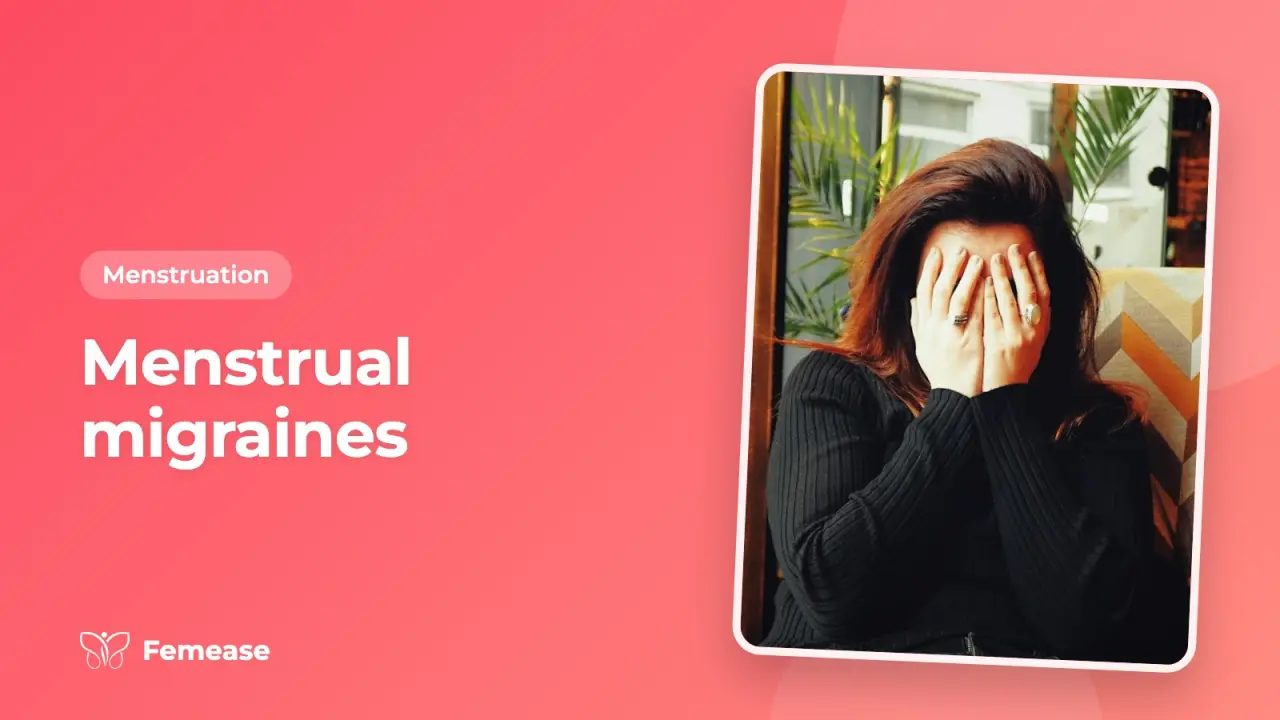
In short: A menstrual migraine is a strong, often one-sided headache that comes just before, during or after your period. It is mainly caused by the sharp drop in oestrogen before bleeding starts. Tracking your cycle, regular sleep, not skipping meals, drinking enough water and cutting down on caffeine and alcohol near your period can help. If the migraines are severe, disabling or not getting better with these changes, see a doctor.
Imagine this: your period’s just around the corner, and suddenly, bam, a throbbing pain starts to take over one side of your head. You know it’s not just a regular headache. It’s a menstrual migraine, and if you’ve ever had one, you know how debilitating it can be.
You’re not alone; many women who get migraines find their attacks are linked to their menstrual cycle. But why does this happen? Let’s break it down in a way that makes sense, and explore what you can do to feel better, beyond quick fixes.
What exactly is a menstrual migraine?
Menstrual migraines are intense, often one-sided headaches that occur just before, during, or after your period. They’re usually more severe, last longer, and are less responsive to treatment than regular migraines.
The biggest culprit? Hormonal fluctuations, particularly the sharp drop in estrogen levels just before menstruation.
Why hormones trigger migraines
Estrogen plays a key role in regulating brain chemicals that affect pain sensitivity. When estrogen levels plummet before your period, serotonin levels can also dip, which may trigger a migraine in sensitive people.
Other contributing factors include:
Prostaglandins (chemicals released during menstruation that cause cramping) can worsen inflammation and pain.
Stress and poor sleep, especially in the luteal phase (after ovulation), can make matters worse.
Are you at risk?
You may be more likely to experience menstrual migraines if:
You already get migraines in general.
You have a family history of hormonal migraines.
Your migraines tend to be cyclic or linked to other hormonal changes (like pregnancy or perimenopause).
How to tell if it’s a menstrual migraine
Track the timing. Menstrual migraines typically occur:
2 days before to 3 days after your period starts (true menstrual migraines).
Or, they may also occur during ovulation (called menstrual-related migraines).
Keeping a symptom journal or using a period tracker app can help you spot patterns.
Holistic ways to manage menstrual migraines
There’s no one-size-fits-all solution, but the good news is—there are several gentle, body-friendly ways to manage and even reduce menstrual migraines over time.
1. Eat regular, whole-food meals
Focus on whole foods, including seeds like flaxseeds and sesame, and healthy fats from walnuts or fish.
2. Food first, supplements only with advice
Foods like nuts, seeds and green leafy vegetables are good for you. Talk to your doctor before taking any herb or supplement for migraines.
3. Ayurvedic wisdom
Ayurveda sees menstrual migraines as linked to a pitta and vata imbalance, and a calm daily rhythm, rest and a gentle head massage are part of its care.
Herbs like Shatavari, Ashwagandha and Brahmi are traditionally used in Ayurveda to soothe the nervous system.
Gentle nasya (nasal oil application) with herbal oils like Anu tailam is a traditional Ayurvedic practice for easing head tension.
These work alongside, not instead of, your doctor's care. If you are pregnant, breastfeeding, have a health condition or are on treatment, check with your doctor before taking any herb. For nasya, learn it from a trained Ayurvedic practitioner first.
4. Sleep & stress
Prioritize consistent sleep, especially before your period.
Practice stress-reducing rituals: yoga, journaling, or guided meditation.
Reduce screen time, especially in the luteal phase.
5. Watch Your Triggers
Limit caffeine, alcohol, and processed sugar near your period.
Avoid skipping meals, fasting can be a hidden trigger.
Hydrate! Even mild dehydration can worsen migraine symptoms.
When to seek medical help
If your menstrual migraines are severe, disabling, or not responding to lifestyle changes, please consult a healthcare professional. A doctor can explain the treatment options that suit you, including preventive care.
You don’t have to “just deal with it.”
Menstrual migraines are real, frustrating, and deeply misunderstood, but you’re not stuck with them forever. Understanding your body’s patterns, gently supporting your hormones, and combining ancient wisdom with modern science can make a huge difference.
So the next time you feel that familiar pulse before your period, remember: there are ways to take back control naturally and compassionately.
Questions women ask
Why do I get a migraine before my period?
Oestrogen falls sharply just before your period. This affects brain chemicals linked to pain, which can set off a migraine in women who are sensitive to it. Stress and poor sleep in the days before your period can make it worse.
How do I know if my headache is a menstrual migraine?
Track the timing. Menstrual migraines usually start from about 2 days before to 3 days after your period begins. Some women also get them around ovulation. A period tracker app or a simple diary helps you spot the pattern.
How can I reduce period migraines naturally?
Keep a steady sleep routine, eat regular meals, drink enough water, and limit caffeine, alcohol and sugary foods near your period. Yoga, journaling or meditation can ease stress. Foods like nuts, seeds and green leafy vegetables are good for you, but check with a doctor before taking any supplement or herb.
When should I see a doctor for a migraine?
See a doctor if your migraines are severe, stop you from working or studying, or do not improve with lifestyle changes. Go to hospital straight away for a sudden, very severe headache, a headache with weakness, numbness, confused speech or vision loss, or a headache with fever and a stiff neck.
General information, not medical advice. Talk to a doctor about your own health.
Talk to a doctor about your periodsFrom the Femease store

For your period
My Cara Ultra-thin Sanitary Pads with Organic Cotton Top Layer (4M+4L+4XL)
12 pads (4 M, 4 L, 4 XL)
199 rupees

For your period
My Cara Ultra-thin Sanitary Pads with Organic Cotton Top Layer (20 Large)
20 Large pads
299 rupees
More about menstruation
Common menstrual disorders
Painful, heavy or missed periods? Learn the signs of common period problems like PCOS, endometriosis, PMS and amenorrhea, and when to see a doctor.
Menstrual myths debunked
Can you exercise or bathe on your period? We bust common period myths, from PMS being imaginary to getting pregnant on your period, with the facts.
Understanding hormonal testing for menstrual irregularities
Discover how simple blood tests can reveal the hidden causes behind menstrual irregularities, so you can take back control of your cycle and your health.
Menstrual cycle and immunity
Catch a cold before your period? Learn how your immune system changes in each phase of your menstrual cycle, and simple ways to look after yourself.

How gut health affects your cycle
Bloating and mood swings with your period? Learn how your gut and hormones are linked, signs your gut may affect your cycle, and ways to support it.
The menstrual cycle’s impact on cognitive performance
Brain fog on your period? Learn how focus, memory and decision-making change across your menstrual cycle, and tips to work with each phase.
