Blood tests for irregular periods: which hormones
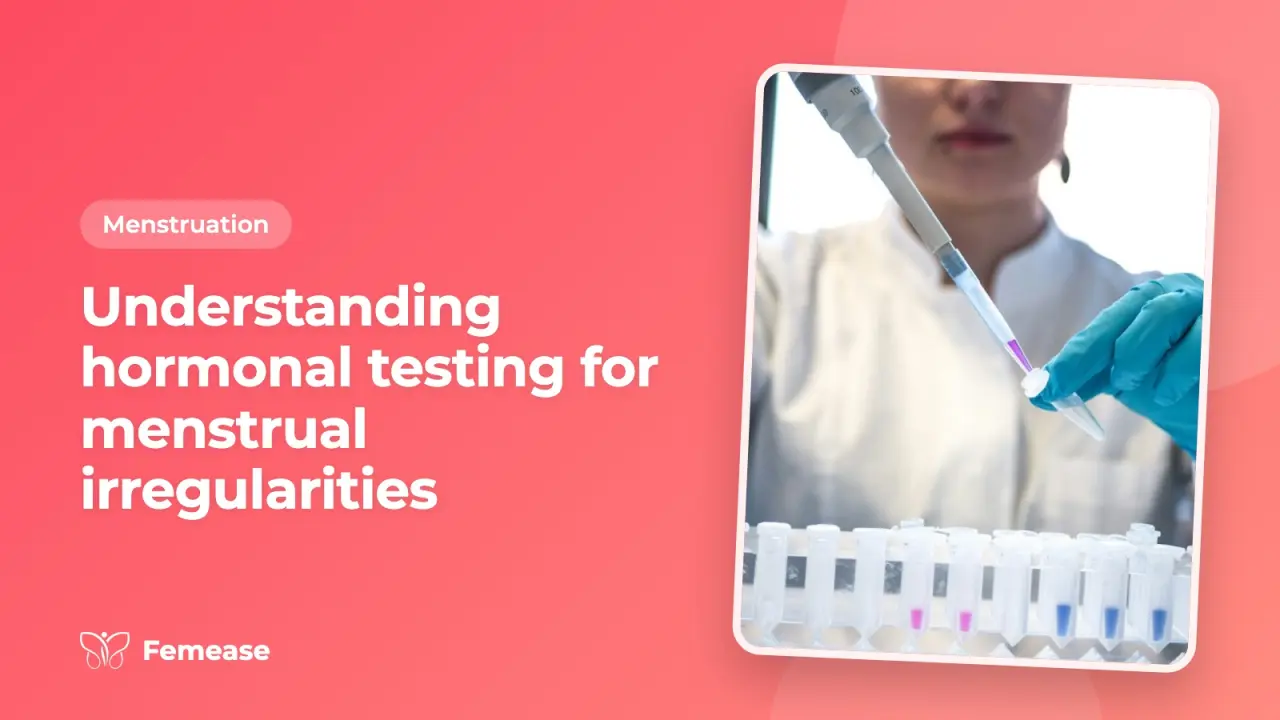
In short: Hormone blood tests help a doctor find out why your periods are irregular instead of guessing. A gynaecologist may check FSH, LH, oestrogen, progesterone, prolactin, testosterone and thyroid hormones, and sometimes AMH, insulin or cortisol. Some tests are done on specific days of your cycle, so ask your doctor when to go. See a gynaecologist if you have no period for 3 months or more, very heavy bleeding, severe pelvic pain or new acne and hair growth.
For many women, getting their period is like clockwork. For others, it is an unpredictable roller coaster, sometimes delayed, sometimes unusually heavy, sometimes missing altogether. While occasional changes can be normal, persistent menstrual irregularities often signal an underlying hormonal imbalance.
What are menstrual irregularities?
First, it helps to understand what qualifies as an irregular period. Here are common examples:
- Cycles shorter than 21 days or longer than 35 days
- Skipped periods (amenorrhea)
- Heavy bleeding (menorrhagia)
- Spotting between periods
- Severe PMS symptoms
These patterns can be frustrating and affect your daily life, from planning your activities to managing your emotions. They also sometimes point to conditions like polycystic ovary syndrome (PCOS), thyroid disorders, perimenopause, or prolactin imbalances.
Why hormones matter in menstrual health
Your menstrual cycle is powered by a complex dance of hormones. The main ones include:
- Estrogen – builds the uterine lining
- Progesterone – stabilizes the lining and supports pregnancy
- Luteinizing Hormone (LH) – triggers ovulation
- Follicle-Stimulating Hormone (FSH) – stimulates egg development
- Prolactin – influences milk production and can disrupt periods if elevated
- Thyroid Hormones (T3, T4, TSH) – regulate metabolism and menstrual regularity
When even one of these hormones is too high or too low, your cycles can go haywire. That’s where hormonal blood tests come in; they help pinpoint the imbalance rather than guessing blindly.
Common hormonal tests for irregular periods
If you consult a gynecologist or endocrinologist, they may recommend a hormonal panel that could include:
FSH & LH levels – to check for ovarian function and PCOS Estradiol (E2) – to assess estrogen production Progesterone – especially if you’re tracking ovulation Prolactin – to rule out high levels that can suppress periods Testosterone & DHEAS – often elevated in PCOS Thyroid function tests (TSH, Free T4, Free T3) – to detect hypothyroidism or hyperthyroidism AMH (Anti-Müllerian Hormone) – to evaluate ovarian reserve, sometimes used in fertility assessment
Depending on your symptoms, your doctor may also test insulin or cortisol levels.
How do you prepare for hormonal testing?
Timing matters. Certain tests are done on specific days of your cycle:
- Day 2–3: FSH, LH, Estradiol (baseline levels)
- Day 21 (or 7 days after ovulation): Progesterone
If your cycles are unpredictable, your doctor will guide you on when to test. Blood samples are typically drawn in the morning when hormone levels are more stable.
What can you learn from the results?
Hormonal testing is not about labeling you; it’s about understanding your body’s unique chemistry. For example:
- High LH and testosterone? May suggest PCOS.
- Low estrogen and high FSH? Possible ovarian insufficiency or early menopause.
- High prolactin? It may be related to a benign pituitary issue.
- Abnormal TSH? Thyroid dysfunction could be the culprit.
Once you have clarity, your doctor can recommend evidence-based treatment—whether it’s lifestyle changes or targeted therapies.
When should you see a doctor?
While stress, travel, or weight changes can cause a skipped period now and then, you should see a healthcare provider if you experience:
- No period for 3+ months
- Very heavy bleeding, soaking through pads every hour (this needs hospital care straight away)
- Severe pelvic pain
- Excessive hair growth or acne
- Unexplained weight changes
Early evaluation prevents small hormonal hiccups from turning into long-term health problems.
Questions women ask
Which blood tests are done for irregular periods?
A doctor may suggest a hormone panel that includes FSH, LH, oestradiol, progesterone, prolactin, testosterone and thyroid tests such as TSH. Depending on your symptoms, AMH, insulin or cortisol may also be checked. Your gynaecologist will choose the tests that fit your situation.
On which day of the period should hormone tests be done?
FSH, LH and oestradiol are usually checked on day 2 or 3 of your period. Progesterone is usually checked around day 21, or about 7 days after ovulation. If your cycles are unpredictable, your doctor will tell you when to test. Samples are often taken in the morning.
Which hormone tests show PCOS?
High LH and high testosterone on blood tests can suggest PCOS. A doctor will look at the results along with your symptoms, such as irregular periods, acne or extra hair growth, and may also suggest an ultrasound before making a diagnosis.
Can a thyroid problem cause irregular periods?
Yes. Both an underactive and an overactive thyroid can upset your cycle, and a simple TSH blood test can check for this. If the result is abnormal, a doctor can guide you on the right treatment.
When should I see a doctor for irregular periods?
See a doctor if you have had no period for 3 months or more and are not pregnant, or if you have severe pelvic pain, excess hair growth, acne or unexplained weight change. Bleeding that soaks a pad every hour, or feeling faint, needs hospital care straight away.
General information, not medical advice. Talk to a doctor about your own health.
From the Femease store

For your period
My Cara Ultra-thin Sanitary Pads with Organic Cotton Top Layer (4M+4L+4XL)
12 pads (4 M, 4 L, 4 XL)
199 rupees

For your period
My Cara Ultra-thin Sanitary Pads with Organic Cotton Top Layer (20 Large)
20 Large pads
299 rupees
Keep reading

What is PCOS? Symptoms, types and tests explained
PCOS is a common hormone condition with irregular periods, acne and extra hair. See the types, the tests doctors use and when to see a gynaecologist.
Thyroid in women: symptoms, causes, tests and pregnancy
Signs of an underactive or overactive thyroid in women, how it affects periods and pregnancy, what the TSH test shows, and when to see a doctor.

Periods in perimenopause: what is normal
In your 40s, swinging hormones can make periods irregular, heavier or lighter. See what is normal in perimenopause and when to see a doctor.

Heavy periods and iron deficiency: signs and causes
Heavy periods are a common reason for low iron. See how blood loss drains your stores, signs women ignore, who is at risk and when to get a blood test.

How the menstrual cycle affects mood, sleep and gut
Yes, your cycle changes more than bleeding. See how hormones shift mood, sleep, digestion and skin each month, and when to see a gynaecologist.

How your menstrual cycle changes with age
Yes, periods change with age, from puberty to menopause. See what is normal in your 20s, 30s and 40s, and when cycle changes need a gynaecologist.
