Perimenopause in your 30s: how your period can change
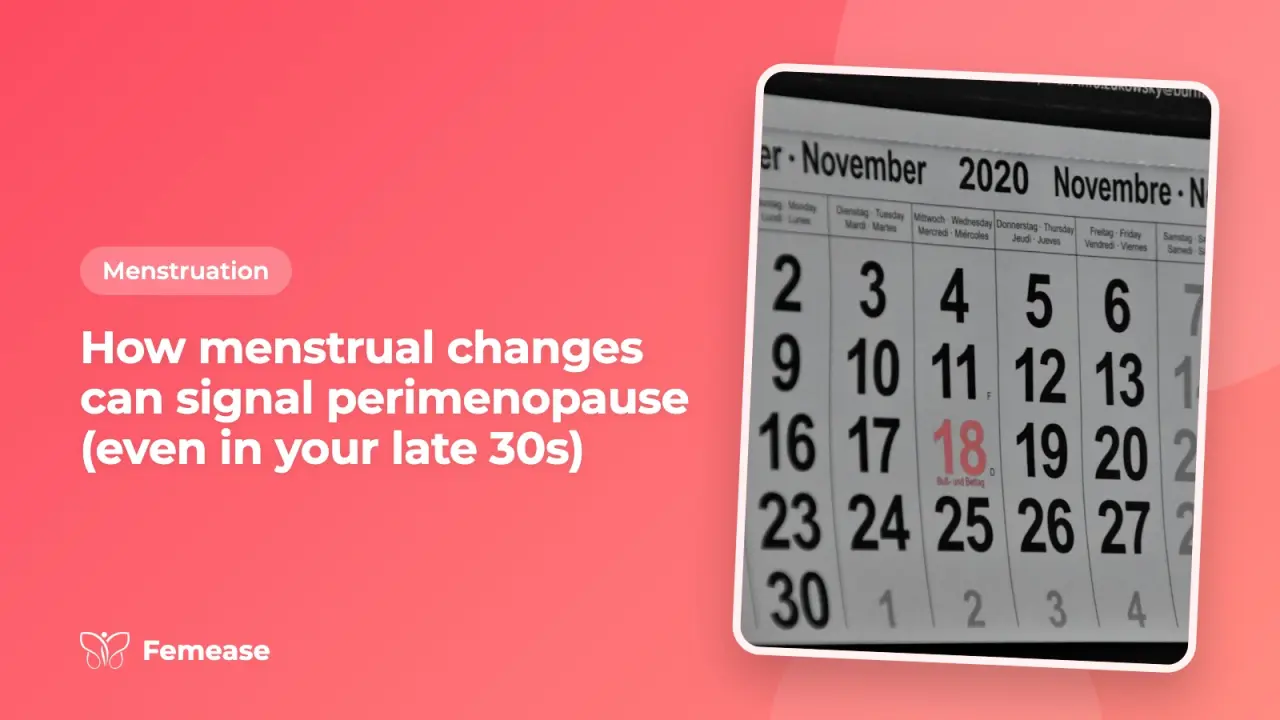
In short: Perimenopause is the run-up to menopause, and for some women it starts in the mid to late 30s. The first clue is often a change in periods: cycles that come earlier or later, skipped or delayed periods, heavier or lighter flow, worse PMS or spotting. Sleep problems, mood swings and brain fog may follow. Rule out pregnancy first, and see a gynaecologist if your periods change a lot, are very heavy, or you spot between periods often.
Most of us grow up learning that menopause happens in our late 40s or early 50s. But many women do not realize that the transition starts much earlier, often silently. If you are in your mid to late 30s and have noticed your periods acting a little… different, it might not just be stress or a fluke. You could be experiencing perimenopause.
Wait, perimenopause in your 30s?
Yes, it is possible, and more common than you might think. Perimenopause is the phase before menopause when your hormones (especially estrogen and progesterone) start to shift. This stage can begin as early as your mid-30s, though most women start noticing changes in their 40s.
But here is the tricky part: the signs are often subtle, easily written off as "just life"—stress, a busy schedule, or a changing lifestyle. But your body might be whispering that something deeper is happening.
Menstrual changes: Your first clue
For many women, changes in their menstrual cycle are the first real sign that perimenopause has arrived. These can include:
1. Shorter or longer cycles
Is your once-predictable 28-day cycle now showing up on Day 21… or Day 40? Irregular periods are often the first red flag. You may ovulate early one month and skip it the next.
2. Heavier or lighter bleeding
Suddenly bleeding through your tampon or finding your flow almost nonexistent? Hormonal fluctuations can mess with the uterine lining, leading to heavier-than-usual or surprisingly light periods.
3. Missed periods (even if you are not pregnant)
Skipping a month or two without explanation can be a perimenopausal symptom. Unlike menopause, your periods return, not always when you expect them to.
4. More intense PMS symptoms
Feel like you are moodier, more anxious, or bloated than ever before? Worsening PMS could be your hormones reacting to decreasing progesterone.
5. Spotting between periods
Occasional mid-cycle spotting might not be anything serious, but frequent spotting should be discussed with a doctor. It could be tied to hormonal imbalances.
Other sneaky signs of early perimenopause
Your period might not be the only thing changing. Watch out for these less obvious symptoms:
- Sleep issues (especially waking up at 3 am)
- Fatigue despite a full night’s sleep
- Brain fog or memory slips
- Mood swings or heightened anxiety
- Lower libido
- Vaginal dryness or discomfort
- New or worsening migraines
While none of these alone confirm perimenopause, together they paint a bigger picture.
Why does it matter to catch this early
Recognizing early perimenopause in your 30s is important, not just for peace of mind, but for long-term health. Early hormonal changes can affect:
- Bone health (risk of osteoporosis)
- Heart health
- Mental well-being
- Fertility planning, if that is still on the table
Getting support early on, whether through lifestyle changes or treatment your doctor suggests, can help you feel more in control of your body again.
If your cycles have become dramatically irregular, you're bleeding excessively, or you are noticing other disruptive symptoms, don’t wait it out. A gynecologist or hormone specialist can do a hormone panel (like checking FSH, estrogen, and AMH levels) to assess whether you are in perimenopause or if another issue is at play.
Supporting your body through the transition
Alongside any treatment your doctor suggests, there are holistic ways to support your body:
- Track your cycle
- Prioritize sleep and stress management
- Eat a balanced, anti-inflammatory diet
- Include phytoestrogen-rich foods (like flaxseeds, lentils, and soy)
- Talk to your doctor before taking any herb or supplement
If you are in your 30s and feeling confused by strange period patterns and mood changes, you are not imagining it, and you are not alone. Perimenopause does not come with a specific age; it comes with symptoms. The earlier you recognize them, the better equipped you will be to support your body and mind through this transition.
Questions women ask
Can perimenopause cause a delayed period?
Yes. As hormones start to swing, ovulation may happen early one month and not at all the next, so periods can come late or be skipped. They usually return, though not always on time. Take a pregnancy test if there is any chance you could be pregnant.
Is it normal to miss periods in perimenopause?
Missing a period now and then is common in perimenopause. Menopause itself is confirmed only after 12 months in a row without a period. Still, tell your gynaecologist about missed periods, as thyroid problems, PCOS, stress or pregnancy can cause them too.
Why are my periods irregular in my 30s?
Irregular periods in your 30s can come from stress, weight change, thyroid problems, PCOS or high prolactin, and sometimes early perimenopause. A gynaecologist can check your hormones and do an ultrasound to find the cause.
When should I see a doctor about perimenopause symptoms?
See a gynaecologist if your cycles change a lot, you spot between periods often, or symptoms disturb your sleep and mood. Go to hospital straight away if you soak a pad every hour for a few hours, pass large clots, or feel faint or breathless.
General information, not medical advice. Talk to a doctor about your own health.
Talk to a doctor about your periodsFrom the Femease store

For your period
My Cara Ultra-thin Sanitary Pads with Organic Cotton Top Layer (4M+4L+4XL)
12 pads (4 M, 4 L, 4 XL)
199 rupees

For your period
My Cara Ultra-thin Sanitary Pads with Organic Cotton Top Layer (20 Large)
20 Large pads
299 rupees
Keep reading

Menstruation in perimenopause
How your period behaves in your 40s, and what it is trying to tell you
Thyroid in women: symptoms, causes, tests and pregnancy
Signs of an underactive or overactive thyroid in women, how it affects periods and pregnancy, what the TSH test shows, and when to see a doctor.

Can travel or flying delay your period?
Period late after travel or in hot weather? A gynaecologist explains how climate, time zones and travel stress affect your cycle, and when to see a doctor.
Ovulation symptoms: signs, timing and your fertile days
Learn the common signs of ovulation, when it usually happens, how irregular periods change the timing, and when ovulation pain needs a doctor.

Why do you crave chocolate before your period?
Hormones and blood sugar drive period cravings. What chocolate, salty and carb cravings may mean, and satisfying swaps.

Menstrual cycles and breast health
Sore or lumpy breasts before your period? Learn which breast changes are normal in your cycle, red flags to watch for, and how to do a self-exam.
