C-section recovery myths
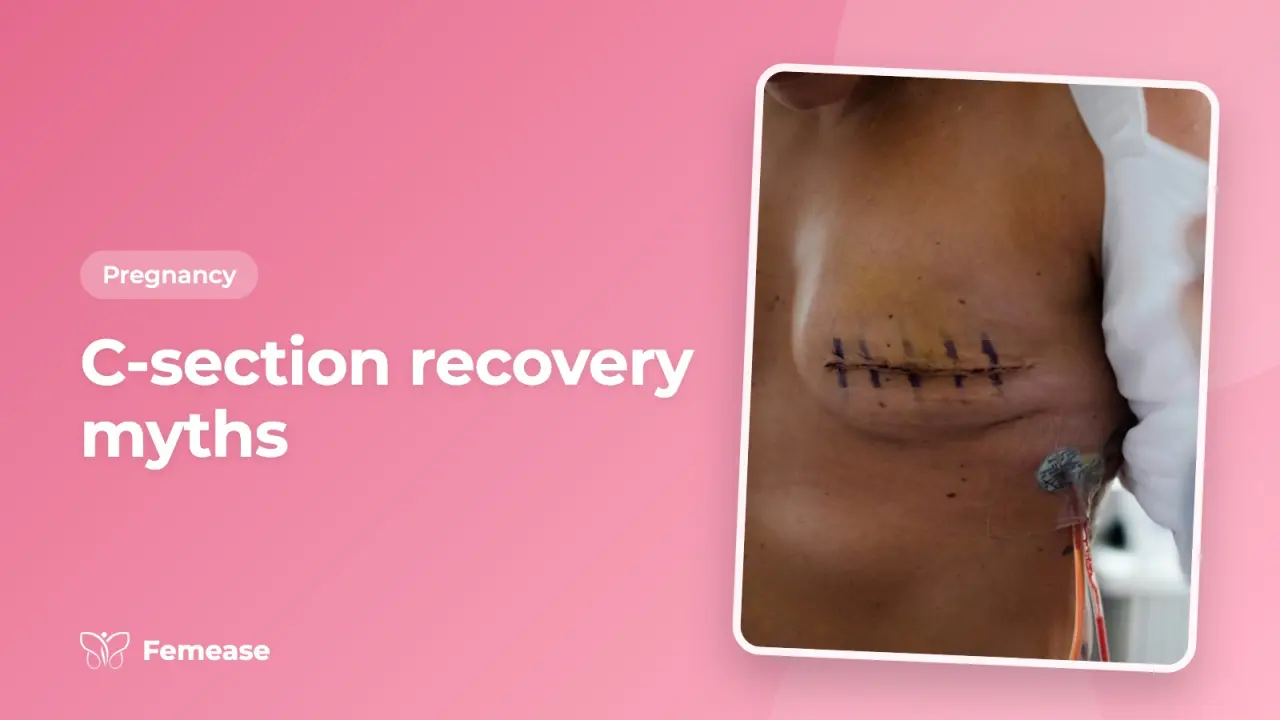
In short: A C-section is major tummy surgery, not the easy way out. Most mothers are encouraged to walk gently soon after, but full healing takes time: many are told not to lift anything heavier than the baby for about 6 weeks, and the tissues can take months to heal fully. The 6-week check is a checkpoint, not a finish line. See your doctor the same day if you get a fever or a red, oozing or opening wound, and go to hospital straight away for heavy bleeding or pain in one leg.
There is no “easy” way to bring a human into the world.
Yet, for some reason, Cesarean births (C-sections) are often surrounded by whispers like, "At least you didn’t have to go through labor." or "You must have bounced back quickly since you didn’t push."
If you’ve heard this before, first, we’re sending you a virtual hug. Now let’s unpack the truth behind these all-too-common C-section recovery myths.
Myth 1: "C-sections are the easy way out."
Reality: C-sections are major abdominal surgeries. That means layers of skin, muscle, and uterus are carefully cut and then stitched back together. Recovery can involve weeks of soreness, restricted movement, and a slower return to daily routines.
You may not have experienced hours of labor, but healing from surgery while caring for a newborn is no shortcut; it’s strength in a different form.
Many C-section moms are advised not to lift anything heavier than their baby for at least 6 weeks. Even standing up straight or laughing too hard can be painful in the early days.
Myth 2: "You’ll be up and moving in no time."
Reality: Yes, doctors do encourage gentle movement soon after surgery to prevent blood clots. But let us not confuse that with being back on your feet. Walking to the bathroom might feel like running a marathon. Sitting, lying down, and rolling over take effort, and often, a little help.
Pain management, rest, and slow, guided movement are all crucial parts of real recovery. And every mother heals at her own pace.
Myth 3: "You won’t have pelvic floor issues like vaginal birth moms."
Reality: While some pelvic floor concerns are more common with vaginal deliveries, C-section mothers aren’t in the clear. Pregnancy itself puts pressure on your pelvic floor. And the muscles that stabilize your core and support your organs are disrupted during a C-section. That can still lead to issues like incontinence, lower back pain, or prolapse if not addressed.
A pelvic floor therapist can help with post-surgery recovery just as much as they do for vaginal births.
Myth 4: "Since it’s surgery, the healing is mostly physical."
Reality: C-section recovery is not just about stitches and scars. It can be deeply emotional, too.
Some moms feel guilt, disappointment, or even trauma if their birth plan didn’t go as expected. Others might struggle with breastfeeding while in pain or feel disconnected from their birth experience.
Healing means honouring the emotional rollercoaster and seeking support when needed. Your birth was powerful, however it happened.
Myth 5: "You’ll feel back to normal after 6 weeks."
Reality: That 6-week mark is a medical checkpoint, not a finish line.
Some moms do feel a little stronger by then. Others are still tender, exhausted, and nowhere near “normal”, and that’s perfectly okay. It can take months for abdominal tissues to heal completely. Some may feel twinges or numbness around the scar for years.
Your timeline is yours. Healing does not clock out at 6 weeks, and you do not have to either.
Questions women ask
Is a C-section the easy way out?
No, that is a myth. A C-section means layers of skin, muscle and the uterus are cut and stitched, and you heal from surgery while caring for a newborn. Weeks of soreness and slow movement are normal. It is strength in a different form.
How long does it take to recover from a C-section?
Many mothers feel a little stronger by 6 weeks, but that is a checkpoint, not the end of healing. It can take months for the tummy tissues to heal fully, and some women feel twinges or numbness around the scar for a long time. Every mother heals at her own pace.
How soon can I lift heavy things after a C-section?
Many mothers are advised not to lift anything heavier than their baby for at least 6 weeks. Ask for help with buckets, laundry and older children, and ask your doctor before going back to exercise or heavy housework.
Can you get pelvic floor problems after a C-section?
Yes. Pregnancy itself puts pressure on the pelvic floor, and the core muscles are disturbed during surgery. Leaking urine, lower back pain or a heavy feeling down below can still happen, and a pelvic floor physiotherapist can help.
What signs after a C-section need a doctor the same day?
Get help the same day for fever or chills, or a wound that is red, swollen, oozing or opening. Go to hospital straight away for pain or swelling in one leg, a severe headache or blurred vision, bleeding that soaks a pad in an hour, chest pain, breathlessness or fainting. If you have thoughts of harming yourself, call Tele-MANAS 14416 or go to the nearest emergency.
General information, not medical advice. Talk to a doctor about your own health.
Talk to a doctor about your pregnancyKeep reading in the Femease app
Save articles, track your cycle or pregnancy, and talk to a doctor when you need one.
Keep reading
C- section recovery vs vaginal recovery
C-section vs vaginal delivery recovery: how pain, complications, movement, emotions and future pregnancies differ, so you know what to expect.

Healing after a c-section
C-section recovery at home: tips on your healing timeline, pain, gentle movement, caring for your stitches, eating well and emotional support.

Pelvic floor health in pregnancy
Pelvic floor in pregnancy: what it is, why it matters, signs it needs strengthening, and how to do Kegels, pelvic tilts and other simple exercises.

Menstrual myths debunked
Can you exercise or bathe on your period? We bust common period myths, from PMS being imaginary to getting pregnant on your period, with the facts.

The role of music and meditation in pregnancy
Music and meditation in pregnancy: how they may help with stress, anxiety and bonding with your baby, and simple ways to start at home.

Sensitive to smells and sounds in pregnancy? Why
Smells, sounds and touch can feel like too much when you're pregnant. Why it happens, and calm ways to cope with sensory overload.
