Emotional eating vs real hunger: how to tell
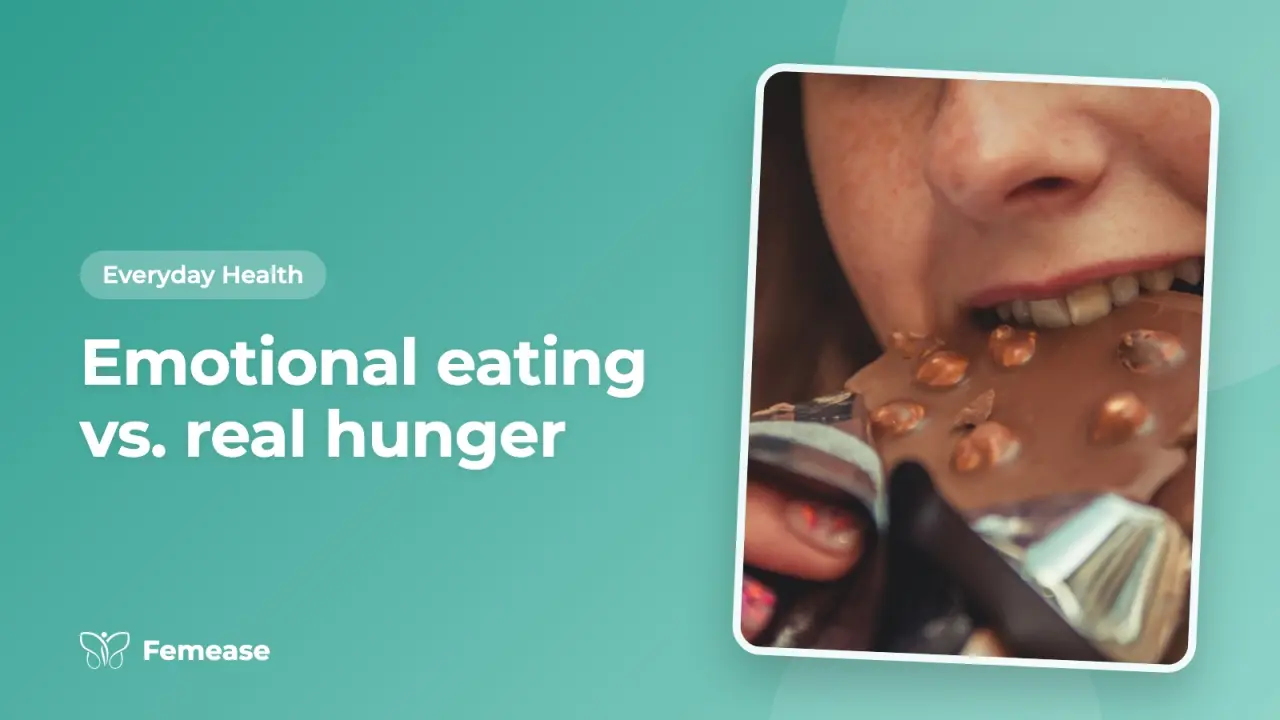
In short: Physical hunger builds slowly, shows up as a growling tummy or low energy, and is satisfied by almost any food. Emotional hunger comes on suddenly, craves specific comfort foods like chips or sweets, and often leaves you feeling guilty. Pausing to ask how you feel, and trying a walk, a call or a few deep breaths, can help. If emotional eating feels out of control or affects your health or mood, talk to a doctor or counsellor.
“I was full… but somehow, I still ended up eating that extra slice of cake.” Sound familiar?
You are not alone. We’ve all been there, eating not because our body needed fuel, but because our feelings did.
Welcome to the world of emotional eating, a pattern many of us fall into when stress, sadness, boredom, or even happiness show up. But how do we know when we are truly hungry, versus when our emotions are just leading us to the fridge?
What is real hunger?
Real (physical) hunger is your body’s natural signal that it needs fuel. It builds gradually and can be satisfied with almost any food, even a simple bowl of rice or a boiled egg.
Here are some signs you are hungry:
- Your stomach is growling
- You feel low on energy or slightly lightheaded
- You can eat anything, not just that chocolate chip cookie
- You have not eaten in 3-4 hours
Fun Fact: Real hunger is controlled by ghrelin, a hormone that increases appetite when your stomach is empty and signals the brain that it is time to eat.
What is emotional hunger?
Emotional hunger comes from the heart, not the stomach. It is often sudden and tied to specific cravings, usually high-sugar, high-fat “comfort foods.”
Some signs you are emotionally hungry:
- The craving comes on quickly and feels urgent
- You are not physically hungry, but want to feel better
- You are eating mindlessly or even secretly
- You are drawn to specific foods like chips, pizza, or ice cream
- You feel guilty after eating
Emotional hunger is your mind’s way of coping with stress, loneliness, sadness, or even happiness. It’s an emotional need, not a nutritional one.
“Why do I emotionally eat?”
It is not weakness, it is wiring. Our brains are hardwired to seek comfort, and food is a fast, socially accepted way to get it. From childhood, we associate sweets with celebrations, chips with parties, or late-night snacks with comfort during hard times.
When life gets overwhelming, the brain often craves dopamine (a “feel-good” chemical), and high-carb, high-fat foods deliver a quick hit.
How to tell the difference (in the moment)
Before you reach for the snack, ask yourself:
- _Did this hunger build slowly over time? _If yes, probably physical hunger. If no, and it came on fast, it could be emotional.
- _Am I open to eating a healthy option? _If you are only interested in junk food, it is emotional.
- When did I last eat? If it has been more than 4 hours, maybe you are just due for a meal!
- How am I feeling emotionally? Stressed, tired, bored, lonely? These are red flags for emotional eating.
So… What can you do instead?
If it is emotional hunger, here are a few non-food ways to comfort yourself:
- Bored? Go for a walk, stretch, or call a friend.
- Stressed? Try deep breathing or journaling your thoughts.
- Lonely? Text someone or spend time with a pet.
- Sad? Play music that matches or lifts your mood.
And if you do end up eating emotionally, forgive yourself. Emotional eating only becomes a cycle when guilt fuels more overeating.
Pro Tip: Keeping a “mood + food” journal for just a week can reveal triggers you never noticed before.
Questions women ask
What is the difference between emotional hunger and physical hunger?
Physical hunger builds gradually, comes a few hours after eating and any food will do. Emotional hunger is sudden, urgent and wants a specific comfort food, even when you are full, and it is often followed by guilt.
What are the symptoms of emotional eating?
Eating when you are not hungry, eating quickly or secretly, craving sweets or fried snacks when stressed, bored, sad or lonely, and feeling guilty afterwards. Keeping a short food and mood diary can show your patterns.
How can I stop emotional eating when stressed?
Pause before eating and ask what you are really feeling. Try a short walk, deep breathing, journaling, calling a friend or music instead. If you do eat emotionally, forgive yourself; guilt tends to keep the cycle going.
When should I get help for emotional eating?
See a doctor or counsellor if you often eat large amounts and feel out of control, make yourself vomit, or feel very low about food or your body. If you have thoughts of harming yourself, go to hospital straight away or call Tele-MANAS on 14416 (free, 24 hours).
General information, not medical advice. Talk to a doctor about your own health.
Keep reading
Emotional capacity vs emotional intelligence
Emotional intelligence is understanding feelings. Emotional capacity is staying with them. Learn the difference and how to build your capacity gently.
Emotional wellness for women: simple daily ways
Emotional wellness means noticing and coping with your feelings. Learn why women often put themselves last and simple everyday ways to build resilience.

Hormonal acne vs fungal acne: how to tell apart
Hormonal acne is deep, sore and around the jawline; fungal acne is tiny, itchy and uniform. Learn the signs that tell them apart and when to see a doctor.
Grief vs depression: how to tell the difference
Grief comes in waves, while depression weighs on most of the day for at least 2 weeks. Learn how to tell them apart and when to ask for help.
Bad posture habits: text neck, couch sink and more
Poor posture usually comes from small daily habits, like scrolling, slouching and heavy one-shoulder bags. See the habits and what to do about each.
Foods that make you tired: what to eat for more energy
Some everyday foods leave you more tired, like white bread, sugary cereal and fried snacks. See the common ones and simple swaps to keep your energy steadier.
