Hair loss, skin changes & nail woes after birth
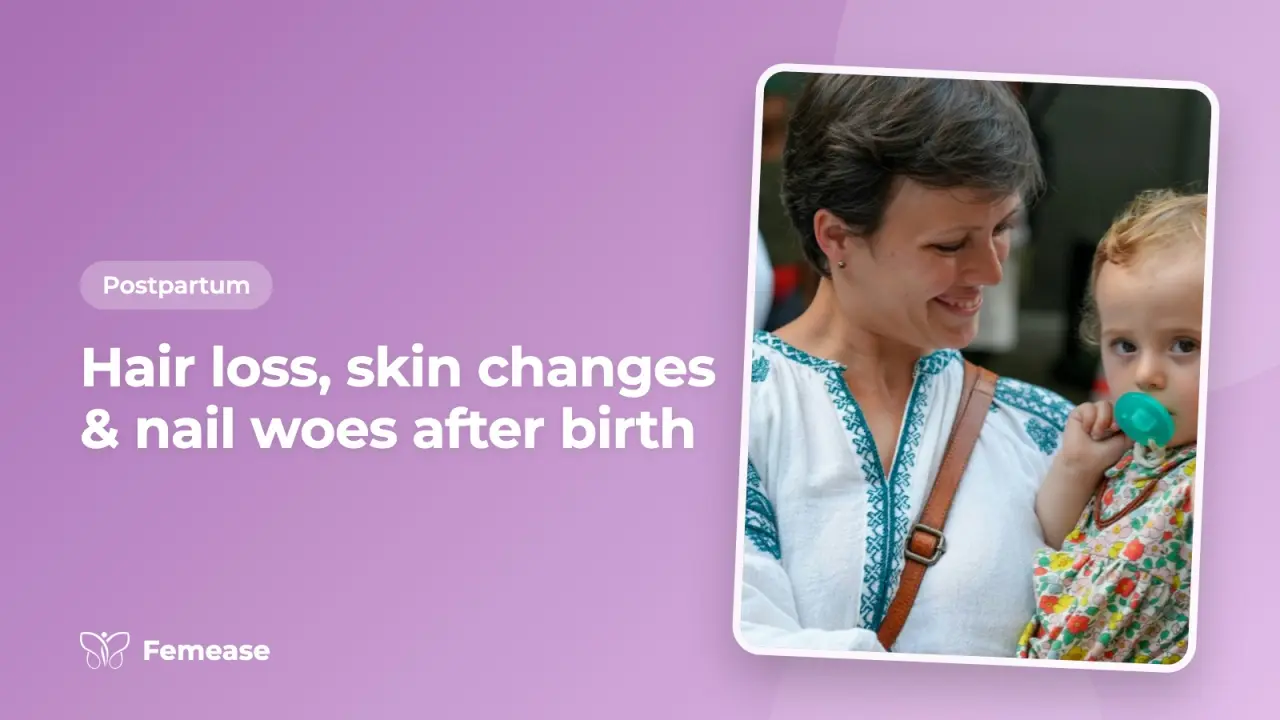
In short: Hair fall after delivery is very common and temporary. High oestrogen in pregnancy keeps hair from shedding, and when it drops after birth that hair falls out, usually from 2 to 4 months postpartum, slowing by about 6 months. Dry skin, acne, dark patches and weak nails can also happen as hormones settle. Eat well, be gentle with hair and skin, and see a doctor or dermatologist if you notice bald patches or hair fall beyond a year.
Hey mama, noticing more hair in your brush lately? Or maybe your skin’s suddenly throwing tantrums like a teenager? You’re not alone, postpartum changes are real, and yes, they can be pretty surprising.
Let’s get into the real talk about what happens to your hair, skin, and nails after birth, and more importantly, why it happens.
Hair loss: Why is it falling out so much?
First things first - postpartum hair loss is completely normal. During pregnancy, high levels of estrogen keep your hair in the “growing” phase. That is why many women enjoy thick, luscious locks while pregnant. But after birth, estrogen levels drop sharply, and all that hair that stayed put? It starts to fall out, sometimes in handfuls.
When does it start? Typically around 2–4 months postpartum. It can last up to a year, but usually starts to slow down by 6 months.
Is it permanent? Nope! It is temporary. Your hair’s growth cycle is just rebalancing. You are not going bald, we promise.
What helps?
- Eat protein- and iron-rich foods (think lentils, leafy greens, eggs)
- Use gentle, volumizing shampoos
- Avoid tight hairstyles and heat styling
- Massage your scalp to boost circulation
Skin changes: From glowing to… what is happening?
Remember that pregnancy glow? That radiant skin was thanks to increased blood volume and hormonal boosts. But after birth, the sudden hormone dip can flip the script.
Common skin changes:
- Dryness or flakiness
- Acne breakouts, even if you never had acne before
- Melasma (dark patches) lingering from pregnancy
- Itchiness or increased sensitivity
What helps?
- Stay hydrated, your skin needs it now more than ever
- Switch to mild, fragrance-free skincare products
- Use a good, gentle moisturizer
- If melasma is bothering you, sunscreen is non-negotiable (even indoors!)
Good to know: These changes are linked to the drop in estrogen and usually settle within a few months postpartum.
Nails: Why are they weak or breaking?
You might notice that your nails, which were stronger during pregnancy, now seem to peel, split, or grow more slowly.
That is also thanks to your hormones playing catch-up. Plus, the physical stress of delivery, breastfeeding, or even nutritional gaps can reflect in your nails.
What helps?
- Keeping nails short and filed
- Gloves while doing dishes or cleaning
- Regular cuticle oil or hand creams
- Ask your doctor before taking any supplement, especially while breastfeeding
Reality check: It is all part of healing
Your body has just done something incredible, growing and birthing a human. These external changes might feel frustrating or make you feel unlike yourself, but they are signs of your body recalibrating.
And you don’t have to suffer in silence. If something feels extreme (like bald spots, severe acne, or painful nail beds), it is always worth checking in with your doctor or dermatologist.
Questions women ask
Is hair loss after delivery normal?
Yes. After birth, oestrogen drops and the hair that did not fall during pregnancy sheds together, sometimes in handfuls. It is temporary and you are not going bald. Your hair's growth cycle is simply rebalancing.
In which month does postpartum hair loss start, and how long does it last?
It usually starts around 2 to 4 months after delivery and slows down by about 6 months, though it can go on for up to a year. If it lasts longer or you see bald patches, see a doctor or dermatologist.
What can I do about hair fall after delivery?
Eat protein and iron-rich foods like dal, leafy greens and eggs, use a gentle shampoo, avoid tight hairstyles and heat styling, and massage your scalp. Check with a doctor before taking any supplement, especially while breastfeeding.
Why does my skin change after delivery?
The sudden drop in hormones can cause dryness, acne, itchiness and dark patches called melasma. Use mild, fragrance-free products, a good moisturiser and daily sunscreen. These changes usually settle within a few months; see a dermatologist for severe acne.
When should I see a doctor about postpartum hair or skin changes?
See a doctor if you have bald spots, hair fall beyond a year, severe acne or painful nail beds. Also tell your doctor if hair fall comes with heavy tiredness, feeling cold or a racing heart, as a thyroid check may be needed.
General information, not medical advice. Talk to a doctor about your own health.
Talk to a doctor about your recovery after birthKeep reading in the Femease app
Save articles, track your cycle or pregnancy, and talk to a doctor when you need one.
Keep reading

Tight hairstyles and traction alopecia
Hair loss from tight ponytails? Learn what traction alopecia is, early signs to watch for, how to style your hair gently, and when to see a dermatologist.
Menopause-driven changes in skin and hair: What to expect
How collagen loss, dryness, and scalp changes hit post-40 and how to support your body through it.

Hair loss in young women
Stress, PCOS, thyroid issues, and poor diet, the hidden triggers you need to know

Pregnancy skin surprises you didn’t see coming
From melasma to skin tags, here’s what’s normal, what’s not, and how to care for your changing skin.
Navigating postpartum with multiples
Postpartum with twins or triplets? Honest help on recovery, sleep, breastfeeding multiples, emotions, home routines and when to talk to your doctor.
Nutrition for lactation-related deficiencies
How breastfeeding can deplete nutrients like iron, B12, calcium, and magnesium.
