Hair loss in young women
In short: Hair loss in young women is common and usually has a cause that can be found. Big stress, PCOS, thyroid problems, low iron or vitamin D, crash diets and the months after childbirth are frequent reasons, along with family history. Stress-related shedding often settles once the trigger passes. If hair keeps falling for more than a few months, comes out in patches, or comes with irregular periods or tiredness, see a dermatologist or gynaecologist for blood tests.
“I am only 25. Why is my hair falling out like this?” If you have ever stood in the shower, watching more strands of hair swirl down the drain than usual, you are not alone, and no, it is not just genetics.
Hair loss in young women is often brushed off or blamed solely on family history. But in reality, genetics is just one piece of the puzzle. More and more young women are silently struggling with hair thinning, patchy loss, and weak regrowth, and the causes go much deeper than we are led to believe.
1. Stress: The invisible culprit
Stress is not just an emotional burden; it is a physiological one. When your body is in a constant state of fight-or-flight, it diverts nutrients and energy away from non-essential functions like hair growth.
Conditions like telogen effluvium, where a major life stressor causes sudden hair shedding, are common in young women. Think exams, job pressure, breakups, or even a post-COVID recovery phase.
Did you know? Emotional and physical stress can push many hair follicles into the resting phase, leading to noticeable hair fall after 2–3 months.
2. PCOS and hormonal imbalances
Polycystic Ovary Syndrome (PCOS) is often linked to acne, irregular periods, and weight gain, but it is also a major player in hair loss.
PCOS can cause androgenicalopecia, where excess male hormones (androgens) shrink hair follicles, especially around the crown and parting line. Unlike genetic baldness, this is not always permanent; early care can often slow it and help regrowth.
Signs to watch for: Irregular periods, facial hair growth, oily skin, and sudden hair thinning around the scalp.
3. Thyroid issues: Small gland, big impact
Your thyroid, a tiny butterfly-shaped gland in your neck, controls your metabolism, energy levels, and yes, hair growth.
Both hypothyroidism (underactive thyroid) and hyperthyroidism (overactive thyroid) can trigger hair thinning, especially across the scalp. Unfortunately, thyroid issues are often missed in young women, mistaken for tiredness or low mood.
Pro tip: If you are dealing with hair fall, fatigue, and unexplained weight changes, ask your doctor for a thyroid panel (TSH, T3, T4).
4. Poor nutrition: Hair needs fuel too
Let us be honest, busy schedules, diet culture, and erratic eating habits can wreak havoc on your nutrient levels.
Hair is made of keratin, a protein. To build it, your body needs protein, iron, zinc, vitamin D and more. Skipping meals, relying on junk food, or following fad diets can silently deplete your body of these essentials.
Simple fix: Include leafy greens, eggs, lentils, seeds, nuts, and fruits in your meals. Also, get your vitamin D and iron levels tested if you are a vegetarian or feel constantly tired.
What can you do about it?
Hair loss in young women is real, common, and fixable. The first step is not to panic, but to investigate.
Here is what you can start with:
Track your symptoms: Keep a note of when the hair fall began, your stress levels, menstrual patterns, and energy.
Get blood tests: Check for iron, thyroid hormones, vitamin D, and hormonal profiles if needed.
Eat balanced meals: Think proteins, healthy fats, and micronutrients.
Reduce stress: Even 10 minutes of daily meditation, journaling, or nature walks helps reset your nervous system.
Consult a specialist: A dermatologist or gynecologist can guide you with a tailored plan.
Hair is more than just appearance; it is part of your identity. And when it starts falling out unexpectedly, it can shake your confidence.
But here is the truth: you are not broken, and you are not alone. Whether it is stress, hormones, or a nutritional gap, understanding the root cause is half the healing.
Your hair can grow back, and so can your confidence.
Questions women ask
Why is my hair falling so much in my 20s?
Common reasons are stress from exams, work or illness, PCOS, thyroid problems, low iron, vitamin D or protein, and fad diets. Stress shedding often shows up two to three months after the stressful event. A doctor can order blood tests to find the cause.
Can PCOS cause hair loss?
Yes. In PCOS, higher levels of male-type hormones can thin the hair, mostly at the crown and along the parting. Other signs are irregular periods, acne, oily skin and extra facial hair. PCOS cannot be cured, but with lifestyle changes and a doctor's care, hair fall can often be slowed, and starting early helps.
Will hair grow back after thyroid hair loss?
In many cases, yes. Once the thyroid problem is found and treated, shedding usually slows and hair grows back slowly over several months. Ask a doctor for a thyroid test if you also have tiredness, weight changes, feel unusually cold or hot, or notice period changes.
Which tests should I get for hair fall?
A doctor will usually check your iron levels, thyroid, vitamin D and a blood count, and sometimes hormones if your periods are irregular. Do not start supplements on your own. Check with a doctor before taking any supplement, as too much of some can cause problems.
General information, not medical advice. Talk to a doctor about your own health.
Talk to a doctor about your skinFrom the Femease store

For glow
Ashwagandha Brightening Elixir
50g
849 rupees 43% off

For glow
Kumkumadi Hydrating Elixir
50g
899 rupees

For weak hair
Amalki Bhringraj Thailam for Stronger Hair & Less Breakage
100ml
799 rupees
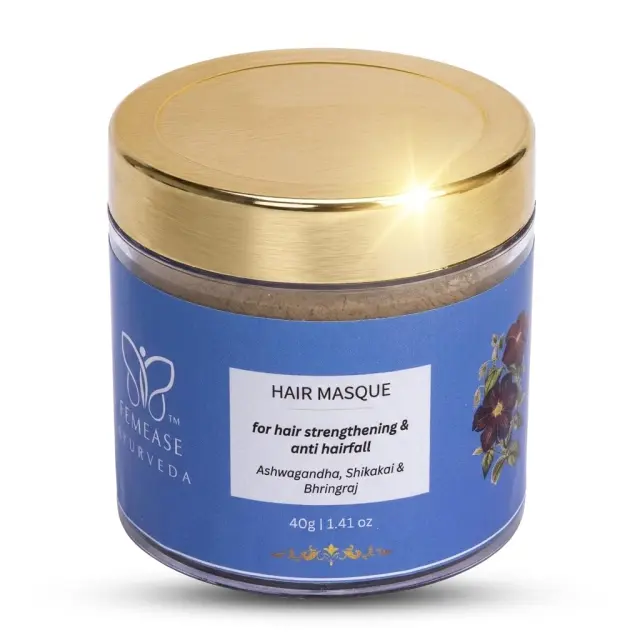
For weak hair
Ashwagandha, Shikakai & Bhringraj Hair Masque for Stronger Hair & Less Breakage
40g
599 rupees 29% off
Keep reading
Tight hairstyles and traction alopecia
Hair loss from tight ponytails? Learn what traction alopecia is, early signs to watch for, how to style your hair gently, and when to see a dermatologist.
Hair loss, skin changes & nail woes after birth
Hair fall after pregnancy? Learn why postpartum hair loss, skin changes and weak nails happen, when they usually settle, and when to see a doctor.
Menopause-driven changes in skin and hair: What to expect
How collagen loss, dryness, and scalp changes hit post-40 and how to support your body through it.
Thyroid in women: symptoms, causes, tests and pregnancy
Signs of an underactive or overactive thyroid in women, how it affects periods and pregnancy, what the TSH test shows, and when to see a doctor.

Does your hair need sunscreen? Hair and scalp sun care
Sun can dry hair, fade colour and burn your scalp. What hair sunscreen does, and easy ways to protect your hair outdoors.
Hormonal acne in adults: It’s not just a teen problem
Why are women in their 30s and 40s still breaking out, and how can they manage it naturally and holistically?
