Hair thinning and scalp sensitivity during menopause
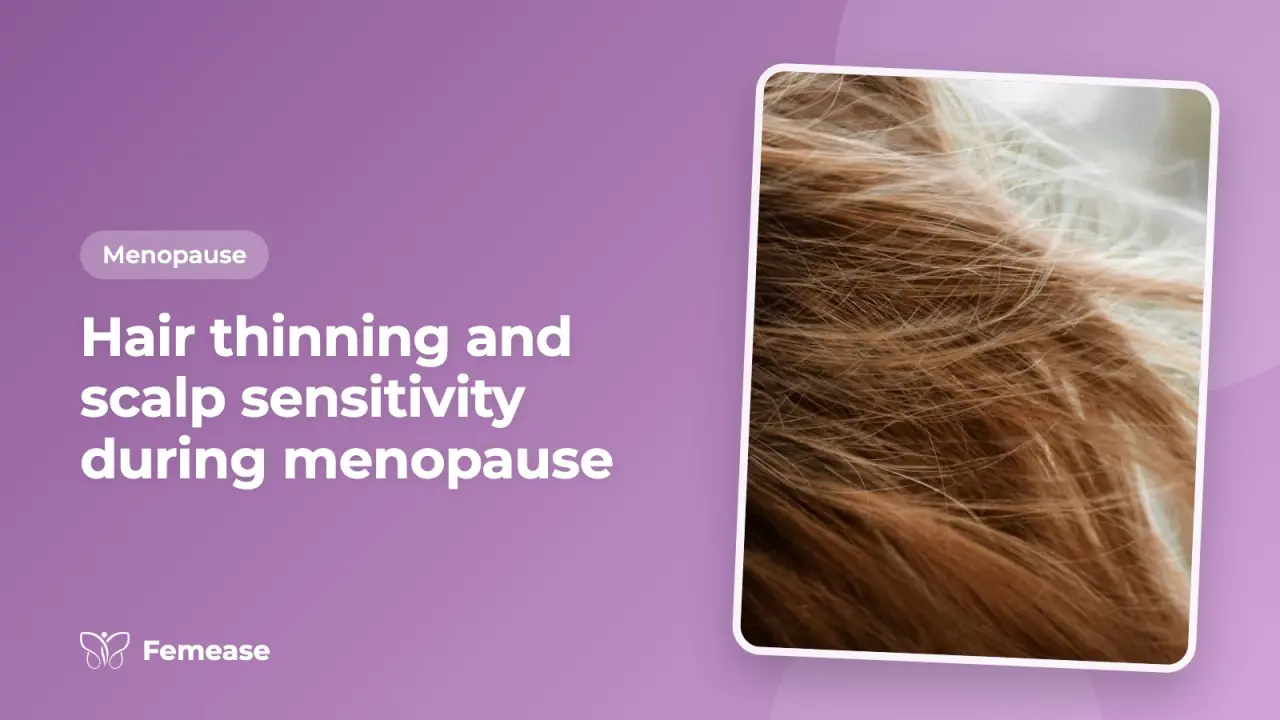
In short: Hair often thins during menopause because oestrogen and progesterone fall, which lets male-type hormones shrink hair roots, mostly at the crown and parting. Thyroid problems, low iron, stress and poor sleep can add to it. The scalp can also turn dry, itchy or tender. Gentle hair care, good food and rest help. See a doctor or dermatologist if hair falls in patches, comes out in clumps, or keeps thinning for months.
“Why is my hair falling out?” That question echoes in the minds of countless women navigating menopause. The mirror tells a different story, less volume, more scalp showing, and hair that just feels different. For many, it is not just about hair loss; it is about a loss of self.
But you are not alone, and more importantly, you are not powerless.
Let us talk about why this happens, what is going on inside your body (and scalp), and how to gently support your hair through this transition.
The hormonal shift: Why hair thinning happens during menopause
The main culprit behind menopausal hair thinning is hormonal imbalance, especially the drop in estrogen and progesterone. These hormones play a key role in supporting hair growth, keeping it in the growing (anagen) phase longer.
As these levels decline, androgens (male hormones like testosterone) can become more dominant. This hormonal shift can shrink hair follicles, slow down growth, and lead to thinner, more brittle strands, especially around the crown and parting line.
But it is not just hormones. Here is what else may be contributing:
- Chronic stress
- Thyroid dysfunction (common during midlife)
- Nutrient deficiencies (such as low iron or vitamin D)
- Inflammation and scalp sensitivity
- Poor sleep and lifestyle changes
Scalp sensitivity: Why your scalp feels tender or irritated
Have you noticed your scalp is more sensitive than before? Maybe it stings after washing, feels dry, or gets itchy easily. That is because as estrogen drops, your skin, including your scalp, becomes thinner and loses moisture.
Add to that some inflammation from follicular miniaturization, and suddenly your regular shampoo feels like sandpaper.
How to nourish hair follicles from within
Your hair is not just about what is on your head; it’s what’s happening inside. Here is how to support your hair from the root:
1. Eat nutrient-rich foods
Focus on:
- Protein (hair is made of keratin): lentils, eggs, nuts, lean meats
- Iron-rich foods: spinach, dates, legumes
- Zinc: pumpkin seeds, almonds, whole grains
- Omega-3s: walnuts, chia seeds, flaxseeds
- Vitamin D: sunlight and fortified foods (ask your doctor whether you need a supplement)
2. Hydration & sleep matter more than you think
Dehydration and poor sleep raise cortisol, which can push hair into the shedding phase. Sip water throughout the day, and aim for 7–8 hours of restful sleep.
3. Ayurvedic herbs and stress care
Gentle yoga, walks and a little time for yourself each day help keep stress down. Ayurveda also has herbs that are traditionally used for hair and stress:
- Ashwagandha: traditionally used in Ayurveda to help the body cope with stress
- Bhringraj: known as the "king of hair" in Ayurveda
- Amla: rich in vitamin C and traditionally used to strengthen hair
These work alongside, not instead of, your doctor's care. If you are pregnant, breastfeeding, have a health condition or are on treatment, check with your doctor before taking any herb.
Haircare routine tweaks for menopausal hair
Your hair needs different things now. Here is how to treat it with kindness:
Switch to gentle, sulfate-free products
Look for pH-balanced shampoos with soothing ingredients like aloe vera, oat protein, or chamomile.
Scalp first, then hair
Incorporate scalp massages with nourishing oils (like rosemary or bhringraj oil) 2–3 times a week. It feels soothing and is a gentle way to care for your scalp, the kind of champi our mothers and grandmothers have always sworn by. Patch test new oils first.
Limit heat styling & harsh treatments
Heat and chemical treatments only add to the stress. Air-dry when you can and use heat protectants.
Avoid tight hairstyles
Say no to ponytails or buns that pull at the roots. Your follicles are more fragile now.
Use satin pillowcases
They reduce friction and prevent unnecessary breakage while you sleep.
Questions women ask
Why does hair thin during menopause?
Oestrogen and progesterone help keep hair in its growing phase. When they drop, male-type hormones have a stronger effect and hair roots shrink, so hair grows thinner and slower, especially at the crown and parting. Thyroid problems, low iron, stress and poor sleep can make it worse.
Will hair lost in menopause grow back?
Often some of it does, especially when a cause like low iron, thyroid trouble or stress is found and treated. Hair thinning from hormones alone is slower to improve, but early care can help keep the hair you have. A dermatologist can tell you what is likely in your case.
Why is my scalp itchy during menopause?
Lower oestrogen makes skin thinner and drier, and the scalp is skin too. It may itch, sting after washing or feel tender. Use a mild, fragrance-free shampoo, lukewarm water and avoid harsh hair treatments. See a dermatologist if itching comes with flaking, sores or bald patches.
What should I do about hair loss in menopause?
Eat enough protein and iron-rich foods like dal, eggs, spinach and nuts, drink water and sleep well. Avoid tight hairstyles, heat styling and harsh chemicals, and be gentle when combing. Check with a doctor before taking any supplement or herbal remedy. See a doctor if thinning is fast, patchy or keeps going.
General information, not medical advice. Talk to a doctor about your own health.
Talk to a gynaecologist about menopauseKeep reading in the Femease app
Save articles, track your cycle or pregnancy, and talk to a doctor when you need one.
Keep reading
Menopause-driven changes in skin and hair: What to expect
How collagen loss, dryness, and scalp changes hit post-40 and how to support your body through it.

Does your hair need sunscreen? Hair and scalp sun care
Sun can dry hair, fade colour and burn your scalp. What hair sunscreen does, and easy ways to protect your hair outdoors.
Mental health and sound sensitivity (misophonia)
When everyday sounds trigger rage, panic, or overstimulation, how does it affect relationships?
Does trimming hair make it grow faster? The truth
Trimming doesn't change how fast hair grows from the root, but it does stop split ends. How hair grows, and how often to trim.
Understanding menopause-induced weight gain
What is happening with metabolism, belly fat, and insulin resistance, and how to work with your body, not against it.
Understanding menopause
What is menopause? Learn the stages, from perimenopause to postmenopause, common symptoms like hot flashes and poor sleep, and ways to manage them.
