Does trimming hair make it grow faster? The truth
In short: No, trimming your hair does not make it grow faster or thicker. That is a myth. Hair grows from the root inside your scalp, and cutting the ends cannot reach it. What a trim does is remove split ends before they travel up and cause breakage, so you keep the length you grow and your hair looks fuller and healthier.
We've all heard it: "You need to trim your hair if you want it to grow faster." It is one of those beauty tips passed down like gospel, whispered between friends, hairstylists, and even the occasional auntie with suspiciously shiny hair.
But is there any truth to it?
Let us cut straight to the chase: Trimming your hair does not make it grow faster. Hair growth starts at the root, not at the ends. So, no matter how often you snip those ends, the hair follicle, where growth happens, does not get the memo.
Then why do so many stylists recommend regular trims? Are they just trying to sell another appointment?
Not quite.
So… what does trimming do?
While trimming does not speed up hair growth from the scalp, it plays a crucial role in keeping your hair healthy, especially if you are aiming for longer lengths.
Here is how:
1. Reduces split ends and breakage
When you let your ends go untrimmed, split ends can travel up the hair shaft, leading to more breakage. This not only makes hair look frayed and dull but also causes it to break off higher up, making it look like it is not growing at all.
Think of it like this: If your hair is growing from the root at a healthy rate but breaking off from the bottom, you will not see any real length gain. Regular trims prevent this cycle of growth and loss.
2. Helps maintain shape and style
Whether you are rocking layers, curls, or a blunt cut, trims help maintain the integrity of your hairstyle. When ends get thin and scraggly, your style loses its structure, and can start looking a bit "meh" even with healthy roots.
3. Makes hair look healthier and fuller
Even if it does not grow faster, hair that’s freshly trimmed often appears thicker, shinier, and more vibrant. And let us be real, who does not want that?
How often should you trim your hair?
The answer depends on your hair type, texture, and goals. Here is a rough guide:
- Every 6–8 weeks if you heat-style regularly, have chemically-treated hair, or are trying to maintain a short style.
- Every 10–12 weeks, if your hair is long, natural, or you are focused on length retention with minimal heat damage.
Remember, the goal is to trim just enough to keep damage in check, not to lose inches unnecessarily.
So, how does hair grow?
Hair growth is a biological process that happens in the follicle beneath your scalp. On average, hair grows about half an inch per month, or 6 inches per year, depending on your genetics, health, age, and hormonal balance.
No trim can speed that up. What you can do to support healthy growth is:
- Keep your scalp clean and well-nourished
- Eat a balanced diet rich in vitamins and proteins
- Minimize heat and chemical damage
- Use protective styles and sleep on silk pillowcases
Trimming your hair does not make it grow faster, but it does help it grow healthier. If your goal is long, strong, beautiful hair, regular trims are your best friend, not because they make hair sprout from your head like magic, but because they prevent breakage and maintain the hair you already have.
So, next time someone says, “You have to trim it to grow it,” you can nod and smile, because now you know the real deal.
Questions women ask
Does trimming hair make it grow thicker?
No. Each strand grows from its follicle, and a trim does not change how many follicles you have or how thick new hair comes in. Freshly cut ends are blunt rather than thin and frayed, so hair can look thicker for a while, but that is only how it looks.
Does trimming hair help it grow longer?
Not faster, but it can help you keep length. Split ends left alone can climb up the strand and make hair snap higher up. Then it seems like your hair is not growing at all. Regular small trims stop that cycle of growing and breaking.
How often should I trim my hair?
It depends on your hair. Every 6 to 8 weeks suits hair that is heat-styled, chemically treated or kept short. Every 10 to 12 weeks is fine for long hair you are growing out with little heat damage. Trim only enough to remove the damage.
What actually helps hair grow healthy?
Keep your scalp clean, eat a balanced diet with enough protein, and cut down on heat and chemical styling. Gentle, protective styles and a smooth pillowcase reduce breakage. If your hair is falling out a lot and it does not stop, see a dermatologist.
General information, not medical advice. Talk to a doctor about your own health.
Talk to a doctor about your skinFrom the Femease store
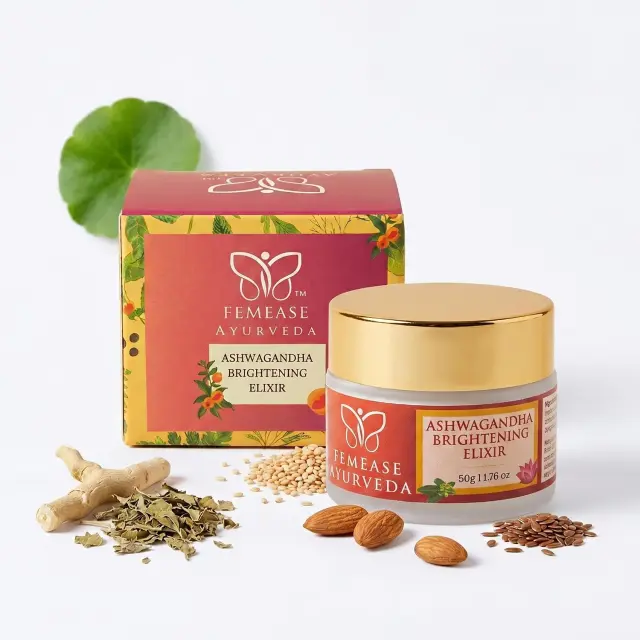
For glow
Ashwagandha Brightening Elixir
50g
849 rupees 43% off

For glow
Kumkumadi Hydrating Elixir
50g
899 rupees
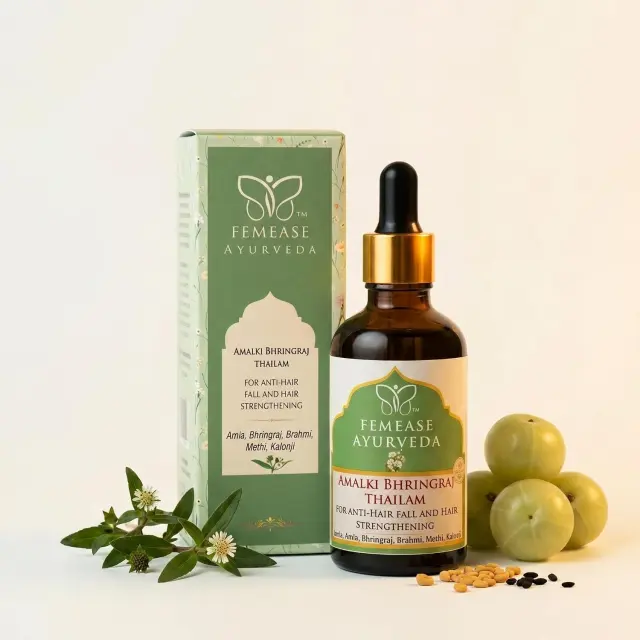
For weak hair
Amalki Bhringraj Thailam for Stronger Hair & Less Breakage
100ml
799 rupees
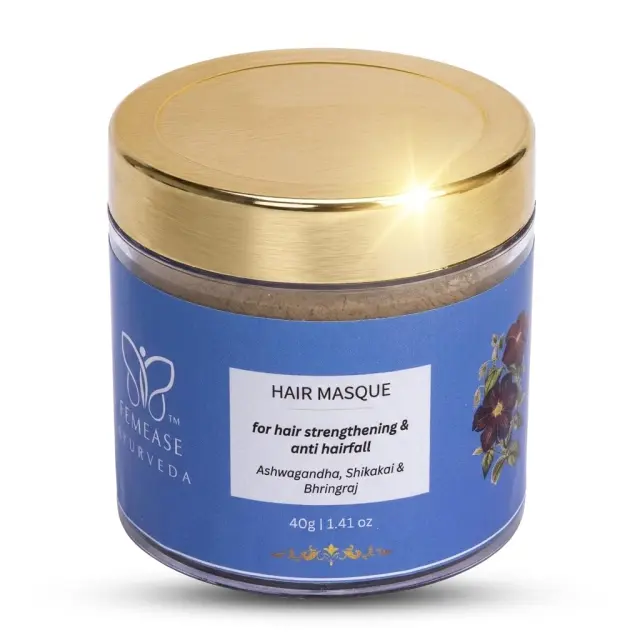
For weak hair
Ashwagandha, Shikakai & Bhringraj Hair Masque for Stronger Hair & Less Breakage
40g
599 rupees 29% off
Keep reading

Tight hairstyles and traction alopecia
Hair loss from tight ponytails? Learn what traction alopecia is, early signs to watch for, how to style your hair gently, and when to see a dermatologist.

Does your hair need sunscreen? Hair and scalp sun care
Sun can dry hair, fade colour and burn your scalp. What hair sunscreen does, and easy ways to protect your hair outdoors.
Hair loss, skin changes & nail woes after birth
Hair fall after pregnancy? Learn why postpartum hair loss, skin changes and weak nails happen, when they usually settle, and when to see a doctor.

Hair botox vs keratin: differences and side effects
What hair botox and keratin treatments do, how long they last, side effects, and which may suit your hair type.

Dry, dull skin? How AC and pollution affect your skin
Dry or dull skin indoors? Learn how AC, humidifiers and air pollution affect your skin, and simple changes to protect it at home and at work.

Beauty for bedridden or low-energy days
Simplified self-care rituals for fatigue, disabilities, or postpartum exhaustion
