Breast pain reason: why it happens and when to worry
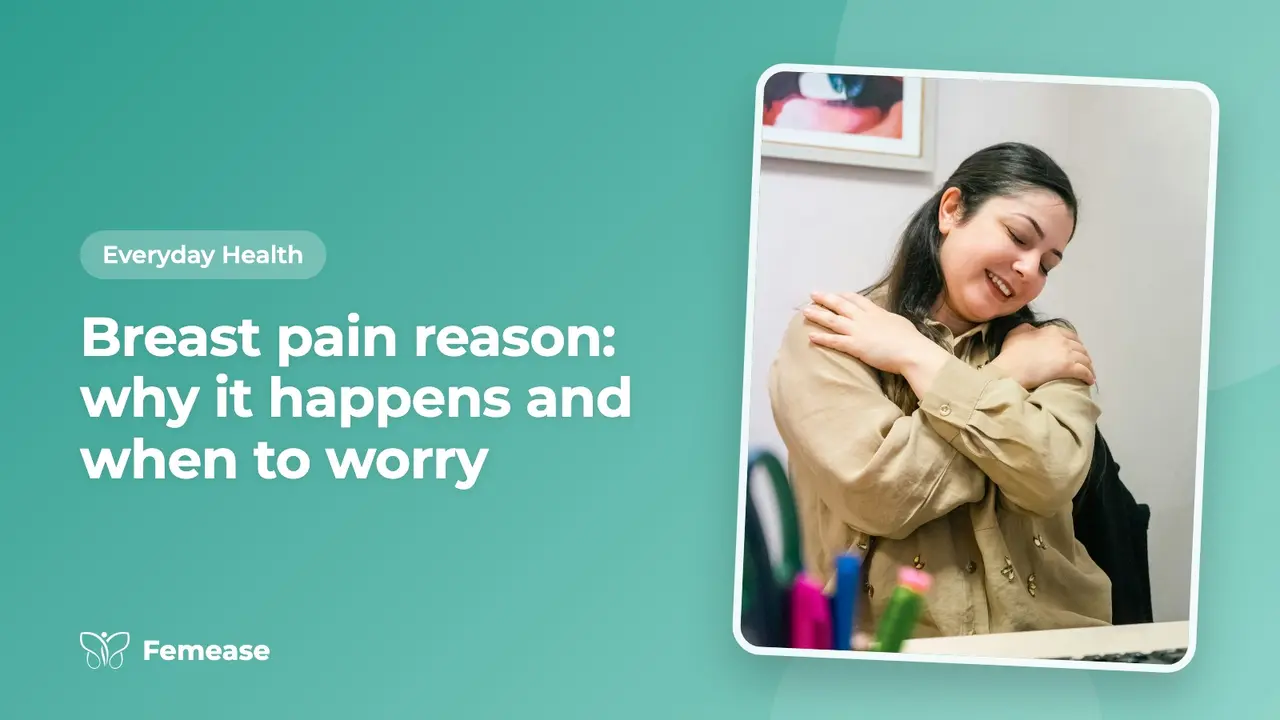
In short: Most breast pain comes from normal hormone changes, especially in the days before your period, in early pregnancy, while breastfeeding and around perimenopause. A bra that does not fit well or a strained chest muscle can also cause it. Breast pain on its own is rarely a sign of cancer. See a gynaecologist if the pain is in one spot, does not go away after your period, or comes with a new lump.
Breast pain can be worrying. Many women feel a sore, heavy ache and their mind jumps straight to the worst. If that is you, take a breath. Breasts are very sensitive to hormones, and a little tenderness at certain times of the month is something most women feel at some point.
Let us go through why it happens, what you can do at home, and which signs mean it is time to get checked.
Why does breast pain happen?
Doctors usually sort breast pain into two kinds.
Cyclical breast pain is linked to your periods. It tends to:
- start in the week or two before your period
- feel like heaviness, fullness or a dull ache in both breasts
- spread towards the armpit
- ease once your period starts
Non-cyclical breast pain has no link to your cycle. It is often in one breast or one spot, and can feel sharp, burning or tight. It can come from:
- a bra that is too tight, too loose or not supportive during exercise
- a strained chest muscle, for example after lifting something heavy or a long bout of coughing
- pain from the chest wall or ribs, which can feel as if it is in the breast
- a cyst, which is a small fluid-filled sac
- an injury or a knock to the breast
Breast pain before and after your period
Breast pain before your period is very common. As oestrogen and progesterone rise after ovulation, breast tissue holds a little more fluid and feels fuller and tender. Once your period comes and hormones drop, the soreness usually settles. You can read more about this pattern in how your cycle affects your breasts.
Breast pain after your period is less typical. Sometimes the cyclical ache simply takes a few days to fade. If pain carries on through the whole month, is in one place, or keeps getting worse, it is worth showing a gynaecologist.
Breast pain during pregnancy
Tender, tingly, heavy breasts are often one of the first signs of pregnancy, sometimes even before a missed period. The rise in pregnancy hormones prepares the breasts for feeding. The soreness is usually strongest in the first few months and often eases later.
A well-fitting, soft, supportive bra helps a lot, and many women find a light cotton bra comfortable at night.
Breast pain while breastfeeding
Some tenderness in the first days of feeding is common. A few things can make it worse:
- Engorgement: breasts become very full, hard and sore, often when milk first comes in or feeds are missed.
- A blocked duct: a tender, firm spot that may feel like a small lump.
- Poor latch: sore, cracked nipples and pain during feeds.
- Mastitis: a red, hot, painful area of the breast, often with fever, chills and body ache like flu.
Feeding often, gently massaging a firm area towards the nipple while feeding, and getting help with latch can make a big difference. Our breastfeeding tips for new moms has more ideas. Mastitis needs a doctor the same day, so do not wait it out.
Breast pain around perimenopause
In your 40s, hormone levels can swing up and down before periods finally stop. This can bring back breast tenderness, sometimes more than you had in your younger years, along with irregular periods, hot flushes and poor sleep. Breast pain after menopause is less common, so new pain at that stage is worth a check.
What helps at home
For most cyclical breast pain, simple steps help:
- Wear a well-fitting, supportive bra, and a sports bra for exercise.
- Try a soft bra at night if your breasts feel heavy.
- Use a warm compress or a cool pack, whichever feels better.
- Cut down on tea and coffee for a few weeks and see if it helps; some women notice a difference.
- Keep a simple note of when the pain comes and goes. This helps a doctor see whether it follows your cycle.
- Gentle exercise, good sleep and less stress can ease how strongly you feel the ache.
When to see a gynaecologist
Book a visit if:
- the pain is in one breast or one spot and does not go away after your period
- the pain lasts more than a few weeks or keeps getting worse
- you feel a new lump or thickening in the breast or armpit
- the skin looks dimpled, puckered or changes colour
- a nipple turns inwards, or there is discharge, especially if it is bloody
- the pain stops you from sleeping or doing everyday things
Go to a doctor the same day if:
- part of the breast is red, hot and painful, especially with fever or chills
- you are breastfeeding and feel unwell with a painful breast
- there is a painful swelling that is getting bigger fast, which could be an abscess
Go to hospital straight away if:
- you have chest pain that spreads to your arm, jaw or back, or comes with breathlessness, sweating or fainting. This may not be breast pain at all, and needs urgent care.
A doctor will ask about your cycle, examine your breasts, and may suggest an ultrasound or a mammogram depending on your age and what they find.
Questions women ask
Is breast pain before your period a sign of pregnancy?
It can be, because early pregnancy and the days before a period cause very similar breast tenderness. You cannot tell them apart by the pain alone. If your period is late, a home pregnancy test is the simplest way to find out.
Breast pain kyu hota hai?
Most of the time breast pain happens because of normal hormone changes in your cycle, pregnancy, breastfeeding or perimenopause. A poorly fitting bra or a strained chest muscle can also cause it. If the pain is in one spot or does not settle, a gynaecologist can find the cause.
Is breast pain after my period normal?
A little soreness for a few days after your period starts can be normal while hormones settle. Pain that stays all month, sits in one place, or keeps getting worse is not typical and should be checked by a gynaecologist.
Can breast pain be a sign of cancer?
Breast pain on its own is rarely a sign of cancer. What matters more is a new lump, skin dimpling, a nipple turning inwards or bloody discharge. If you notice any of these, or have pain in one spot that does not go away, see a doctor soon.
Why do my breasts hurt during perimenopause?
In perimenopause, hormone levels rise and fall unevenly before periods stop. These swings can make breasts tender, even if you never had much breast pain before. A supportive bra and keeping a note of the pattern help, and a gynaecologist can check anything new.
General information, not medical advice. Talk to a doctor about your own health.
Talk to a doctorKeep reading in the Femease app
Save articles, track your cycle or pregnancy, and talk to a doctor when you need one.
Keep reading
Breast lump: common causes, symptoms and what to do next
Most breast lumps are not cancer, but every new lump needs a check. Common causes, warning signs, lumps after delivery, and how doctors test.
Painful sex reasons: why it hurts and what can help
Painful sex is common and treatable. Learn the usual reasons, from dryness and infection to vaginismus and endometriosis, what helps and when to see a doctor.
Menstrual cycles and breast health
Sore or lumpy breasts before your period? Learn which breast changes are normal in your cycle, red flags to watch for, and how to do a self-exam.

Period pain relief: home remedies that help and when to worry
Why period cramps happen, simple home remedies and gentle exercises for relief, and the signs that period pain may need a gynaecologist's check.

Low libido in women: why desire dips and what can help
Low libido in women is common and not your fault. Learn the causes, from stress and having a baby to menopause and thyroid, what helps and when to see a doctor.
HPV vaccine, Pap smear and cervical cancer: what women should know
How the HPV vaccine and Pap smear protect you from cervical cancer: who should get the vaccine, its side effects, early symptoms and when to get tested.
