Lower abdominal pain in females: causes and when to worry
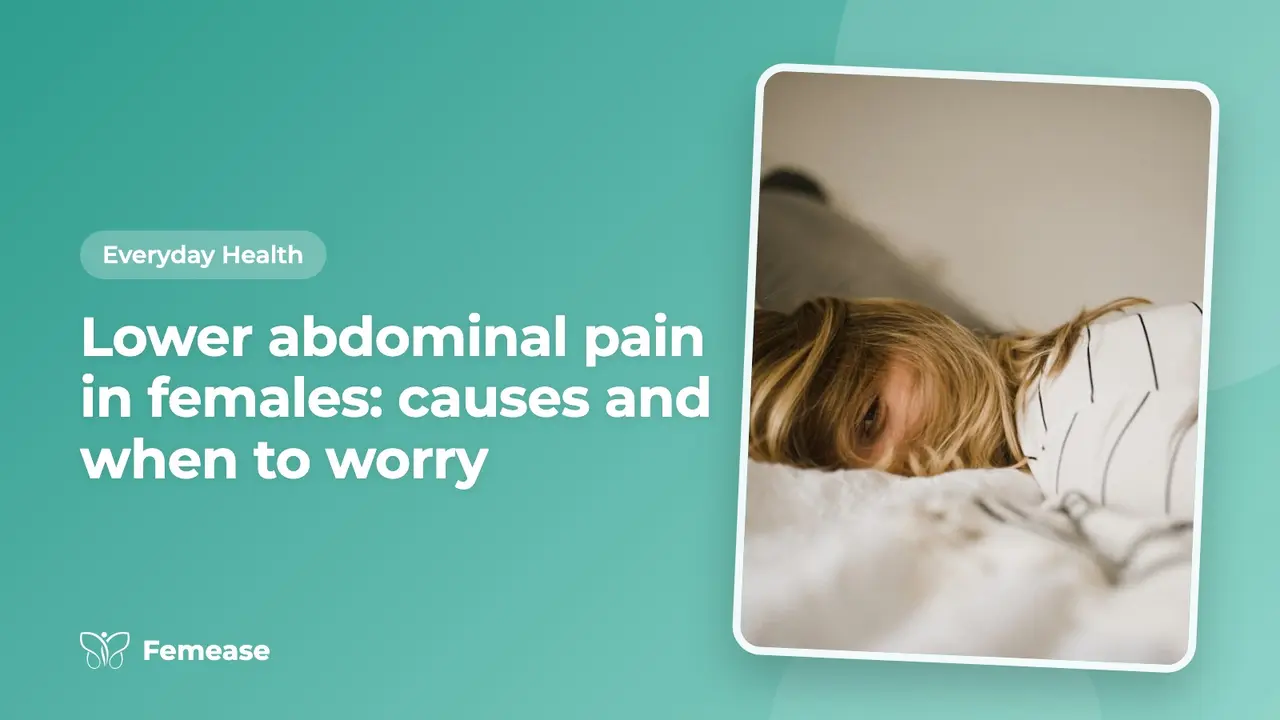
In short: Lower abdominal pain in women is most often caused by periods, ovulation, gas, constipation or a urine infection. Sometimes it comes from the womb, ovaries or tubes, such as an infection, a cyst or endometriosis, and occasionally from an emergency like appendicitis or an ectopic pregnancy. Go to hospital straight away for sudden severe pain, and see a gynaecologist if pain keeps coming back or comes with fever, unusual discharge or a missed period.
Pain low down in the tummy is one of the most common reasons women see a doctor. Because the womb, ovaries, bladder and bowel all sit close together, it can be hard to tell where the pain is really coming from. Most of the time it is something simple. But some causes need quick care, so it helps to know the signs.
What causes lower abdominal pain in females?
Common, usually less worrying causes:
- Period pain: cramping in the lower tummy, sometimes spreading to the back and thighs, around the start of your period. See our guide to period pain relief.
- Ovulation pain: a one-sided ache or twinge around the middle of your cycle that lasts a few hours to a day or two.
- Gas, bloating and constipation: crampy pain that moves around and eases after passing wind or opening your bowels.
- Urine infection (UTI): pain or pressure above the pubic bone with burning while passing urine.
Causes that need a doctor:
- Pelvic inflammatory disease (PID): an infection of the womb, tubes or ovaries, often with unusual discharge, fever or pain during sex.
- Ovarian cyst: a dull ache or heaviness on one side; a cyst that bursts or twists can cause sudden severe pain.
- Endometriosis: pain with periods that is severe, gets worse over time, or comes with pain during sex or opening your bowels.
- Fibroids: heaviness, pressure, and heavy periods.
Emergencies:
- Appendicitis: pain that often starts around the belly button and moves to the lower right, getting steadily worse, with fever, nausea or loss of appetite.
- Ectopic pregnancy: a pregnancy growing outside the womb, usually in a tube. It can cause one-sided pain, spotting and dizziness, often after a missed period.
Does the side of the pain tell you the cause?
Not on its own. Pain on the left or right side can come from the ovary or tube on that side, the bowel, or the kidney. On the right, appendicitis is one important cause. On the left, constipation is common. But the side alone can never confirm a diagnosis, and several causes can show up on either side. What helps a doctor more is how the pain started, how strong it is, and what other symptoms come with it.
Lower abdominal pain with other symptoms
With burning urination: this usually points to a urine infection. Drinking plenty of water helps, but a UTI needs a doctor's check so it can be treated properly and does not spread to the kidneys. Read more in UTI in women.
With white discharge: normal discharge does not cause pain. Discharge that is yellow, green, grey or smelly, together with lower tummy pain, can be a sign of infection such as PID and needs a gynaecologist. Our guide to white discharge explains what is normal.
With a missed period: mild cramping can be an early pregnancy sign. But pain with a missed period, especially if it is on one side or comes with spotting, must be checked quickly to rule out an ectopic pregnancy.
Is lower abdominal pain a sign of pregnancy?
Some women feel mild cramps or a pulling feeling in early pregnancy as the womb grows. This is usually mild and comes and goes. If you might be pregnant, take a home pregnancy test. If the test is positive and you have pain or bleeding, see a doctor the same day, and go to hospital straight away if the pain is severe or on one side, or you feel faint.
What helps at home
For mild pain you recognise, such as period cramps or gas:
- Rest and use a hot water bag on your lower tummy.
- Drink warm water and eat light, simple food like dal-chawal or khichdi.
- Add fibre, fruit and water if you are constipated.
- Gentle walking can ease gas and cramps.
- Keep a note of when the pain comes, where it is, and how it links to your period or meals.
If the pain is new, strong, or not settling, do not keep managing it at home.
When to see a gynaecologist
Book a visit if:
- you have lower tummy pain that keeps coming back
- period pain is getting worse each month or stops you from daily life
- you have pain during sex
- you notice unusual discharge, bleeding between periods or a change in your cycle
- pain comes with bloating or a feeling of fullness that does not go away
Go to a doctor the same day if:
- you have lower tummy pain with fever or chills
- you have pain with smelly or coloured discharge and feel unwell
- you have burning urination with fever or back pain
- you have a positive pregnancy test with mild pain or spotting
Go to hospital straight away if:
- the pain is sudden and severe, or one-sided and getting steadily worse
- you feel faint, dizzy or you collapse
- you have a positive pregnancy test with severe or one-sided pain, shoulder-tip pain, heavy bleeding, dizziness or fainting
- you are soaking a pad every hour
- your tummy is hard, swollen and very tender, or you keep vomiting
How a doctor finds the cause
A doctor will ask about the pain, your periods, discharge, urine and bowel habits, and whether you could be pregnant. They will examine your tummy and may do an internal examination. Tests can include a urine test, a pregnancy test, blood tests, and a pelvic ultrasound to look at the womb and ovaries.
Questions women ask
What does lower abdominal pain on the left side mean in females?
Left-sided pain can come from the left ovary or tube, such as ovulation pain or a cyst, or from the bowel, like constipation or gas. The side alone cannot tell you the cause. If the pain is severe, keeps returning or comes with fever, see a doctor.
Is lower abdominal pain on the right side serious?
It can be harmless, like ovulation pain or gas, but the right side is also where appendicitis usually hurts. Pain that starts near the belly button, moves to the lower right and gets steadily worse, especially with fever or vomiting, needs hospital care straight away.
Is lower abdominal pain a sign of pregnancy?
Mild, on-and-off cramping can happen in early pregnancy. Take a home test if your period is late. If the test is positive and you have pain on one side, dizziness or fainting, go to hospital straight away to rule out an ectopic pregnancy; for spotting with mild pain, see a doctor the same day.
Why do I have lower abdominal pain with burning urination?
This is most often a urine infection. Drink plenty of water and see a doctor so it can be treated properly. If you also have fever, back pain or vomiting, see a doctor the same day, as the infection may be reaching the kidneys.
What does white discharge with lower abdominal pain mean?
Normal discharge does not cause pain. Discharge that changes colour or smell together with lower tummy pain can be a sign of a pelvic infection. A gynaecologist can examine you and find the right treatment, which helps protect your fertility later.
I have a missed period and lower abdominal pain. What should I do?
First take a home pregnancy test. If it is positive and you have pain, see a doctor the same day, or go to hospital straight away if the pain is severe or on one side. If it is negative, the pain may be your period on its way, but get checked if it continues.
General information, not medical advice. Talk to a doctor about your own health.
Talk to a doctorKeep reading in the Femease app
Save articles, track your cycle or pregnancy, and talk to a doctor when you need one.
Keep reading

UTI in women: symptoms, causes and how to prevent it
Burning urine, urgency and lower tummy pain are common UTI signs in women. Learn why UTIs happen, home care, prevention and red flags for kidney infection.
Ovarian cyst symptoms: types, causes and when to worry
Most ovarian cysts are harmless and go away on their own. Learn the symptoms, causes, how they differ from PCOS and which pain needs urgent care.
Breast pain reason: why it happens and when to worry
Why breasts hurt before periods, in pregnancy, while breastfeeding and in perimenopause, what helps at home, and when breast pain needs a doctor.
Joint pain during your period: why it happens and when to worry
Exploring less-recognized symptoms like ligament laxity and hypermobility syndromes.

Hemoglobin low symptoms: signs of anaemia in women and what helps
Tired, breathless or dizzy? The signs of low haemoglobin in women, common causes like heavy periods and pregnancy, iron-rich foods and when to see a doctor.

Painful sex reasons: why it hurts and what can help
Painful sex is common and treatable. Learn the usual reasons, from dryness and infection to vaginismus and endometriosis, what helps and when to see a doctor.
