Joint pain during your period: why it happens and when to worry
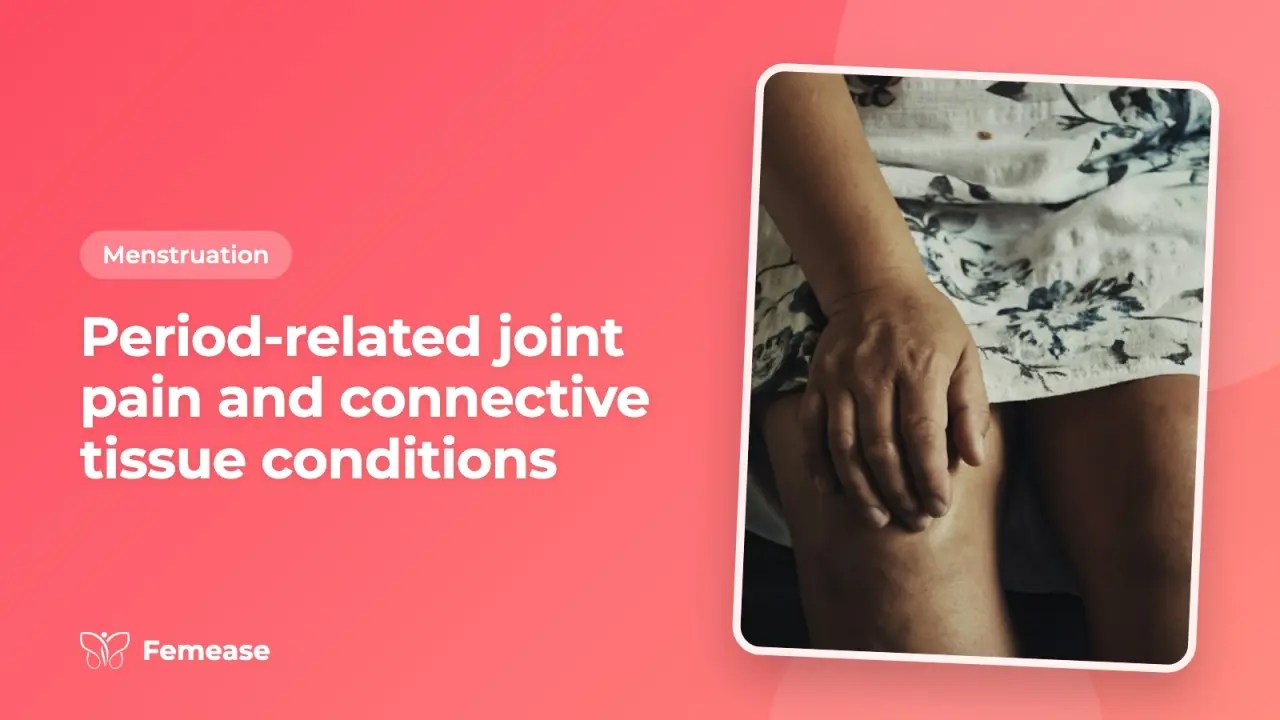
In short: Yes, many women notice achy joints just before or during their period. The likely reasons are the same chemicals that cause period cramps (prostaglandins), pain that spreads from the womb to the back and thighs, and hormone changes that may make some people more sensitive to pain or, in people with very flexible joints, a bit less stable. Period-linked aches that come and go with your cycle are usually not serious, but swollen, hot or stiff joints, or pain that doesn't follow your cycle, need a doctor's check.
Let's look at what's happening and what you can do.
Is joint pain during periods normal?
It is common, though research on it is still limited. The NHS lists bloating, cramping, headaches and breast tenderness as PMS symptoms, and it lists joint and muscle pain as a symptom of PMDD, a more severe form of PMS. Many women also describe a general "achy body" feeling in the days before bleeding starts.
Part of what feels like joint pain may actually be period pain travelling. The NHS explains that period cramps can spread from your tummy to your back and thighs. So a sore lower back, aching hips or heavy thighs on day 1 or 2 is a very familiar pattern.
What doesn't fit a "normal" period pattern: a joint that is swollen, red or warm, pain that is there all month, or stiffness that lasts a long time every morning. We cover these in "When to see a doctor" below.
Why your joints may ache before and during your period
Your cycle affects far more than your womb. Here's more on how the menstrual cycle affects other body systems.
Prostaglandins
ACOG (the American College of Obstetricians and Gynecologists) explains that period cramps are caused by prostaglandins, chemicals made in the lining of the womb. They make the muscles of the womb contract. Levels are highest on the first day of the period and fall as bleeding goes on, which is why pain usually eases after the first few days. These chemicals are part of the body's inflammation system, which may be one reason some women feel more achy overall on those days. Your menstrual cycle and immunity are closely linked too.
Hormone shifts
Oestrogen and progesterone rise and fall through the cycle. Both affect many tissues, not just the womb. Studies on whether ligaments actually get looser at certain points in the cycle have mixed results, so this is a "may", not a "definitely".
Tiredness, poor sleep and low mood
PMS can bring tiredness, trouble sleeping and low mood, according to the NHS. When you are tired and sleeping badly, aches feel bigger. This is real, not "in your head".
Perimenopause
If you are in your 40s, the NHS lists muscle aches and joint pains among the symptoms of perimenopause and menopause. Joint pain that is new and arrives along with changes in your periods, hot flushes or night sweats may be part of this stage.
Hypermobility: when very flexible joints make periods harder
Some women have always been "double-jointed". They can bend their thumb back to their wrist or sit in positions others can't. Being flexible on its own is common and often harmless. But for some people it comes with ongoing symptoms.
What is joint hypermobility syndrome?
The NHS describes joint hypermobility syndrome as having very flexible joints along with symptoms such as:
- often feeling tired, even after rest
- repeated pain and stiffness in joints or muscles
- frequent sprains and strains
- joints that dislocate ("pop out")
- poor balance or coordination
- thin, stretchy skin
- bladder or bowel problems
Doctors often now use the name hypermobility spectrum disorder. A doctor usually checks flexibility with a simple test called the Beighton score.
Ehlers-Danlos syndromes
Ehlers-Danlos syndromes (EDS) are a group of inherited conditions that affect connective tissue, the "glue" that holds joints, skin and organs together. The NHS says there are 13 types, and hypermobile EDS (hEDS) is the most common. People with hEDS may have loose, unstable joints that dislocate easily, joint pain, clicking joints, extreme tiredness, skin that bruises easily and digestive problems.
What research says about periods and hypermobility
A 2016 study of 386 women with hypermobile EDS in France found that over one-third (133 women) had their pain and tiredness get worse around every period. The same group also reported a lot of period problems: 76% had heavy periods and 72% had painful periods.
This was one clinic's patients, and the researchers said more studies are needed. But if you are very flexible and your joints feel worse every month, you are not imagining the link.
Signs your joint pain might be linked to your cycle
You may be seeing a cycle link if:
- the aches start a few days before your period and ease once it settles
- your lower back, hips or thighs hurt mostly on the first one or two days of bleeding
- you are very flexible and your joints feel more unstable or clicky around your period
- you feel more clumsy or more prone to twisting an ankle at certain times of the month
The best way to know is to track it. Note the day of your cycle, which joints hurt, and how bad it was on a scale of 1 to 10, for at least two or three cycles. A period tracker makes this simple, and it's a good reminder that period tracking is health tracking.
What can help
These everyday steps are low-risk and worth trying. For other treatment options, talk to a doctor.
- Track your pain. A pattern makes your doctor's job much easier.
- Use heat. The NHS suggests a warm bath or shower, or a heat pad or hot water bottle (wrapped in a cloth), for period pain. A hot water bottle on the lower back works well for many women.
- Keep moving gently. The NHS suggests gentle exercise like yoga, swimming, walking or cycling for period pain. For hypermobility, it advises starting with low-impact exercise and notes that not exercising can make symptoms worse.
- Build muscle strength. For hypermobility, the NHS says the main approach is improving muscle strength and fitness so joints are better protected. A physiotherapist can show you exercises that suit your body.
- Don't push joints to their limits. If you are very flexible, avoid overextending joints just because you can, and take breaks from repetitive activities.
- Wear supportive footwear. Flat, unsupportive chappals all day can be hard on ankles and knees, especially if they are loose.
- Plan your heavy days. If your joints feel unstable around your period, save heavy lifting, long treks or new high-impact workouts for other days.
When to see a doctor
Book a doctor consultation if:
- a joint is swollen, red or warm
- you have joint pain with fever or feel unwell
- your joints are stiff for a long time every morning (the NHS notes that long-lasting morning stiffness can be a sign of rheumatoid arthritis)
- the pain is there all month, not just around your period
- your joints keep dislocating, or you keep spraining the same joint
- your periods are very painful or heavy, or you have pain during sex, or when peeing or pooing (these can be signs of conditions like endometriosis; the endometriosis signs check on Femease's health checks can help you note them)
- your period pain is severe and doesn't ease with rest and heat
A gynaecologist can look at the period side. Depending on your symptoms, you may also be referred to a rheumatologist (joint specialist) or physiotherapist.
If a joint is suddenly hot, red and very painful and you also have a fever, get medical help the same day.
Questions women ask
Can periods cause joint pain?
They can. Prostaglandins, the chemicals behind period cramps, rise at the start of your period, and cramps can spread to your back and thighs. Hormone changes may also affect pain sensitivity. If pain comes and goes with your cycle, it is likely linked.
Is PMS joint pain a real thing?
Many women describe aches before their period. The NHS lists joint and muscle pain as a symptom of PMDD, the severe form of PMS, though research on joint pain in ordinary PMS is limited. Tracking your symptoms for a few cycles is the best way to see whether your pain follows a pattern.
Why do my hips and lower back hurt during my period?
Period cramps come from the womb tightening, and the NHS notes this pain can spread to your back and thighs. Very painful periods can also be a sign of conditions such as endometriosis or fibroids, so see a doctor if pain is severe or getting worse.
Does hypermobility get worse during periods?
For some women, yes. In a study of 386 women with hypermobile EDS, over one-third said their pain and tiredness got worse around every period. A physiotherapist can help you plan exercise around your cycle.
When should I worry about joint pain during my period?
See a doctor if a joint is swollen, red or warm, if you have a fever, if you are stiff for a long time each morning, or if the pain is there all month rather than just around your period.
Sources
- NHS: Period pain; PMS (premenstrual syndrome); Joint hypermobility syndrome; Ehlers-Danlos syndromes; Menopause symptoms; Rheumatoid arthritis symptoms
- ACOG: Dysmenorrhea: painful periods
- Hugon-Rodin J, et al. Gynecologic symptoms and the influence on reproductive life in 386 women with hypermobility type Ehlers-Danlos syndrome. Orphanet Journal of Rare Diseases, 2016
General information, not medical advice. Talk to a doctor about your own health.
Talk to a doctor about your periodsFrom the Femease store

For your period
My Cara Ultra-thin Sanitary Pads with Organic Cotton Top Layer (4M+4L+4XL)
12 pads (4 M, 4 L, 4 XL)
199 rupees
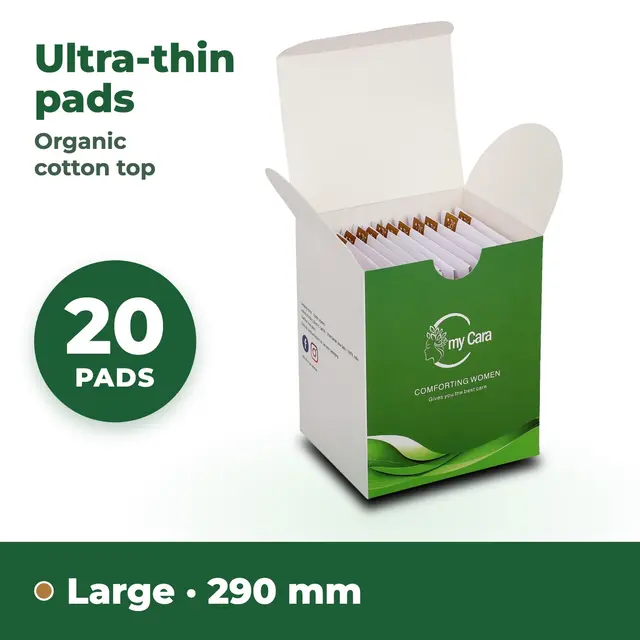
For your period
My Cara Ultra-thin Sanitary Pads with Organic Cotton Top Layer (20 Large)
20 Large pads
299 rupees
Keep reading
Postpartum hip and joint pain
Hip or back pain after delivery? Learn why joint pain can linger postpartum, which areas it affects, gentle steps that help, and when to see a physio.
Period pain relief: home remedies that help and when to worry
Why period cramps happen, simple home remedies and gentle exercises for relief, and the signs that period pain may need a gynaecologist's check.
Brown discharge: why it happens and when to worry
Brown discharge is usually old blood. Learn why it appears before or after a period, in early pregnancy or with no period, and when to see a doctor.
Breast pain reason: why it happens and when to worry
Why breasts hurt before periods, in pregnancy, while breastfeeding and in perimenopause, what helps at home, and when breast pain needs a doctor.
Menstrual cycle and immunity
Catch a cold before your period? Learn how your immune system changes in each phase of your menstrual cycle, and simple ways to look after yourself.
Can't sleep before your period? Why it happens
Trouble sleeping in the days before your period? How progesterone and body temperature affect sleep, and what can help you rest.
