Period cravings: what they mean and why they happen
In short: Period cravings are real and are not about willpower. In the week or two before your period, falling oestrogen can lower serotonin, the brain's feel-good chemical, so your body reaches for sugar, carbs and fat for a quick lift. Blood sugar also swings more easily at this time. Eating balanced meals, sleeping well and choosing healthier versions of what you crave can help. If cravings turn into binge eating or come with severe mood changes, talk to a doctor.
Chocolate. Chips. A mountain of carbs. If you have ever found yourself raiding the kitchen a few days before your period, you are not alone. Period cravings are real, and they are not just about willpower (or lack of it). There’s actual science behind why your body goes into full snack-attack mode during that time of the month.
Why do we get period cravings?
Cravings during your menstrual cycle are not random. They are often linked to hormonal fluctuations, nutrient shifts, and mood changes that happen in the luteal phase, the two weeks before your period begins.
1. Hormones are running the show
Estrogen and progesterone levels fluctuate throughout your cycle. Right before your period, estrogen dips, which can affect serotonin levels (the feel-good brain chemical). Your body tries to naturally boost serotonin through high-carb, sugary, or fatty foods—hence the desire for chocolate, pastries, or pizza.
2. Blood sugar rollercoaster
As progesterone rises in the second half of your cycle, your insulin sensitivity drops. This can cause your blood sugar levels to fluctuate more easily, leading to sudden hunger or strong cravings for quick-fix energy, think carbs and sweets.
3. Magnesium and iron may be low
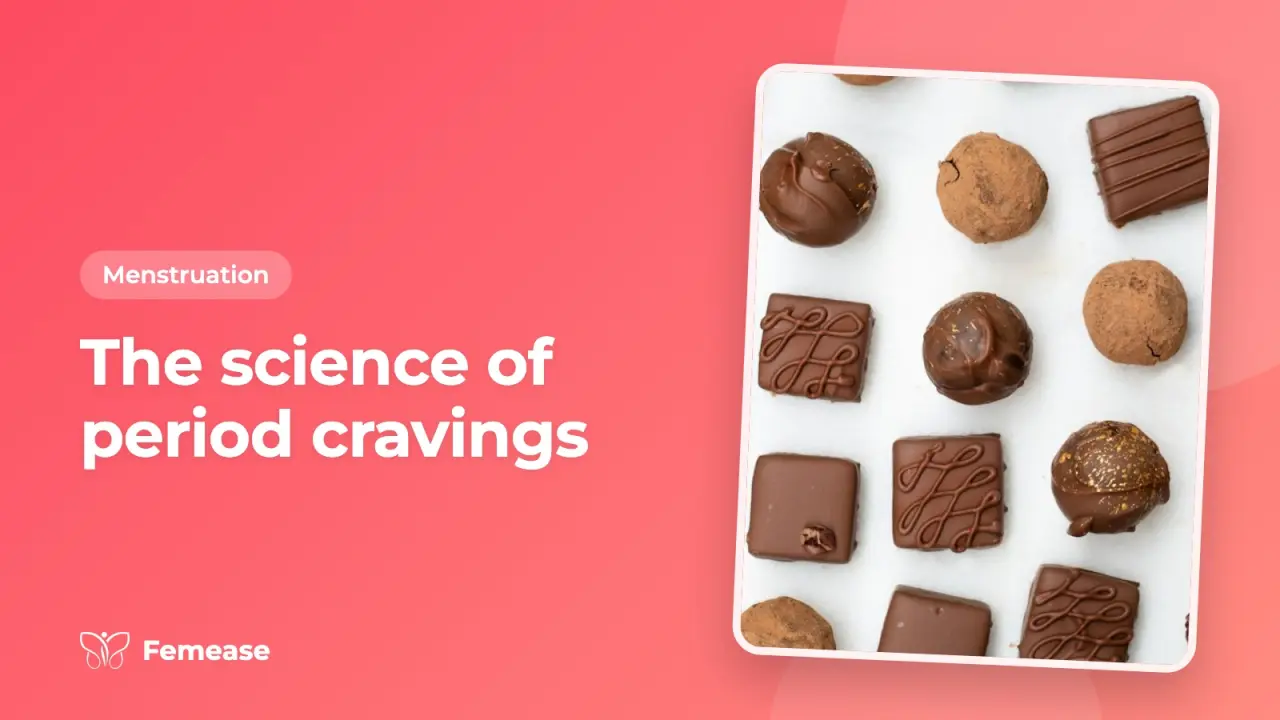
Some women who experience intense cravings may be low in magnesium or iron. Chocolate, a common period craving, contains magnesium, and your body might be trying to self-correct a deficiency. Similarly, if you are losing iron during menstruation, you may crave red meat or salty snacks.
Common period cravings and what they mean
Here is what your go-to period snacks might be telling you:
Craving chocolate
- Possible reason: Low magnesium or serotonin.
- Your body says: “I need a mood boost or a mineral top-up.”
- Better swap: Dark chocolate (70% or higher) for a serotonin lift with less sugar.
Craving salty foods
- Possible reason: Shifting electrolyte levels or dehydration.
- Your body says: “Balance my fluids!”
- Better swap: Try roasted nuts or air-popped popcorn with sea salt.
Craving carbs
- Possible reason: Low energy, unstable blood sugar, or low serotonin.
- Your body says: “Fuel me up, fast!”
- Better swap: Whole-grain toast or oats to stabilize blood sugar longer.
Is it okay to give in to period cravings?
Yes and no. It is completely normal to indulge a little, especially when your energy is low and emotions are running high. But consistently giving in to ultra-processed, sugary, or high-sodium foods might leave you feeling bloated, sluggish, or moody.
Pro tip: Listen to your cravings, then offer your body a nourishing version of what it wants.
How to curb cravings (without depriving yourself)
- Eat balanced meals throughout your cycle with protein, healthy fats, and complex carbs.
- Stay hydrated- sometimes thirst disguises itself as hunger.
- Ask your doctor to check if you might be low on magnesium or iron.
- Get enough sleep- sleep deprivation intensifies cravings.
- Practice mindful eating- pause before you snack and check in with how you are feeling.
If your cravings are extreme, lead to binge eating, or come with intense emotional symptoms (like severe mood swings or depression), you might be dealing with PMS or even PMDD (Premenstrual Dysphoric Disorder). These are medical conditions that deserve professional attention and care.
Your period cravings are not just about being “hangry” or “emotional”- they are your body’s way of signaling what it needs. By understanding the science behind them, you can better support your health and still enjoy that piece of chocolate (guilt-free!).
Questions women ask
What do period cravings mean?
They are mostly your hormones talking. Lower oestrogen and changing blood sugar before your period push you towards quick comfort foods. Some women who crave a lot may be low in iron or magnesium, which a doctor can check with a simple test.
Why do I crave chocolate before my period?
Chocolate gives a quick mood lift and contains magnesium, so it may answer both low serotonin and a mineral dip. A few pieces of dark chocolate instead of sugary sweets can satisfy the craving with less sugar.
How can I deal with period cravings?
Eat regular meals with protein, healthy fats and whole grains, drink enough water, and try to sleep well. Pause before snacking to notice how you feel. Swap chips for roasted nuts and sweets for fruit or a little dark chocolate. Check with a doctor before taking any supplement.
When are period cravings a sign of something more?
If cravings lead to regular binge eating, or come with severe mood swings, deep sadness or anger that affects your daily life, it may be PMS or PMDD. These are real conditions, and a gynaecologist can help you manage them.
General information, not medical advice. Talk to a doctor about your own health.
From the Femease store

For your period
My Cara Ultra-thin Sanitary Pads with Organic Cotton Top Layer (4M+4L+4XL)
12 pads (4 M, 4 L, 4 XL)
199 rupees 22% off

For your period
My Cara Ultra-thin Sanitary Pads with Organic Cotton Top Layer (20 Large)
20 Large pads
299 rupees 45% off
Keep reading
Sweet or salty cravings in pregnancy: boy or girl?
Sweet means a girl, salty means a boy? No. Cravings, sour, sweet or even pica, can't predict your baby's sex. What research says and why cravings happen.
Postpartum food aversions and cravings: why they happen
Yes, food aversions after delivery are common. Hormones, breastfeeding and poor sleep change your appetite. How long they last, and what helps.
Blood tests for irregular periods: which hormones
Hormone blood tests help a doctor see why your periods are irregular. Learn which tests like FSH, LH and thyroid are done, and how to prepare for them.
Hypomenorrhea: what very light periods can mean
Hypomenorrhea means unusually light periods. Common causes, from PCOS and thyroid problems to low body weight and stress, and when to see a doctor.
Periods in perimenopause: what is normal
In your 40s, swinging hormones can make periods irregular, heavier or lighter. See what is normal in perimenopause and when to see a doctor.
Perimenopause in your 30s: how your period can change
Periods changing in your late 30s? Learn the period signs of early perimenopause, other signs women miss, and when to see a gynaecologist for tests.
