Mental health and the language we use with ourselves

In short: Self-talk is the running voice in your head. When it is mostly harsh, such as I always mess things up, it can feed stress, low self-esteem and depression. You cannot silence your inner critic overnight, but you can learn to notice it, question it and speak to yourself the way you would speak to a friend. If your inner voice feels hopeless most days, talk to a therapist or doctor.
Have you ever caught yourself thinking, _“_I’m such a failure,” or _“_Why can’t I be more like them?” You are not alone.
The truth is, we all talk to ourselves. Constantly. Sometimes it is out loud, but most often, it is in our heads. This internal dialogue, also known as self-talk, can be either encouraging or quietly destructive. When left unchecked, negative self-talk becomes one of the most invisible but powerful forces contributing to depression and low self-esteem.
What is self-talk, and why does it matter?
Self-talk is the running commentary we have with ourselves throughout the day. It is the story we tell ourselves about who we are, how we fit into the world, and what we are capable of.
- Positive self-talk sounds like: “I made a mistake, but I can fix it.”
- Negative self-talk sounds like: “I always mess things up. I am hopeless.”
It may seem subtle, but over time, this language becomes the lens through which we see ourselves. And when the script is consistently critical, it can feed into mental health issues like depression and anxiety.
Reality check: It is not just “all in your head.”
This is not about being overly sensitive or dramatic. Persistent negative self-talk can keep your body in stress mode and raise cortisol levels (your body’s stress hormone).
In simpler words? Your thoughts are not just thoughts. They affect how your body feels too.
How self-talk fuels depression and low self-esteem
Depression is not just sadness; it is a disorder that can make even basic tasks feel overwhelming. And negative self-talk often acts like the gasoline to that fire.
Here is how:
1. Reinforcing hopelessness
When you tell yourself, “Things will never get better,” your brain starts believing it. This creates a cycle of helplessness where hope feels out of reach.
2. Feeding the inner critic
Many people with depression describe their internal voice as harsh, unforgiving, or cruel. That inner critic becomes louder over time, overshadowing any voice of reason or self-compassion.
3. Blocking healthy relationships
Low self-worth makes it hard to accept love or kindness from others. You might think, “They’re just being nice, they don’t mean it,” pushing people away before they can truly connect.
So, can you change your self-talk?
Yes, and no. You cannot flip a switch and silence the inner critic overnight. But you can notice your thoughts, challenge them, and slowly rewrite the script.
Try these steps:
1. Start by listening
Before you can change your self-talk, you need to hear it. Pay attention to your internal dialogue throughout the day, especially when something goes wrong.
2. Ask: Would I say this to a friend?
If your best friend made a mistake, would you tell them they are a failure? No? Then why say it to yourself?
3. Write it down
Journaling can be a powerful way to catch patterns in your self-talk. Over time, you will notice recurring themes and can begin to consciously shift them.
4. Practice self-compassion
Speak to yourself kindly, especially on hard days. Instead of saying, “I’m so lazy,” try, “I didn’t have the energy today, and that’s okay.”
5. Seek support
Therapy, support groups, or talking to someone you trust can make a world of difference. Sometimes, we need help to quiet the voice in our heads.
Mental health is complex, and self-talk is just one part of the picture. But it is an incredibly powerful one. If your mind has been a harsh place to live lately, know this: you are not broken, you are human. And just like any story, your inner narrative can evolve.
It starts with awareness. With compassion. And one kinder thought at a time.
Questions women ask
What are examples of negative self-talk?
Common ones are I am such a failure, I always mess things up, why can't I be more like them, things will never get better, or they are only being nice. Kinder versions sound like I made a mistake, but I can fix it.
How do I stop negative self-talk?
Start by listening to what you say to yourself, especially when things go wrong. Ask whether you would say it to a friend. Write your thoughts down to spot patterns, and replace harsh words with kind, realistic ones.
What is the inner critic?
It is the harsh, judging voice inside that tells you you are not good enough. In depression it can become louder and crueller, drowning out kinder thoughts. Therapy can help you recognise it and answer it back.
When is negative self-talk a sign I need help?
If your thoughts feel hopeless most days, you are pulling away from people, or daily tasks feel too hard, talk to a therapist or doctor. If you have thoughts of harming yourself, get help straight away: go to the nearest hospital emergency or call Tele-MANAS, India's free mental health helpline, on 14416.
General information, not medical advice. Talk to a doctor about your own health.
Talk to a therapistKeep reading in the Femease app
Save articles, track your cycle or pregnancy, and talk to a doctor when you need one.
More about mental health

The double-tap dilemma
Do likes affect your self-esteem? Learn how social media validation shapes how we feel about ourselves, especially for young people, and where to start.
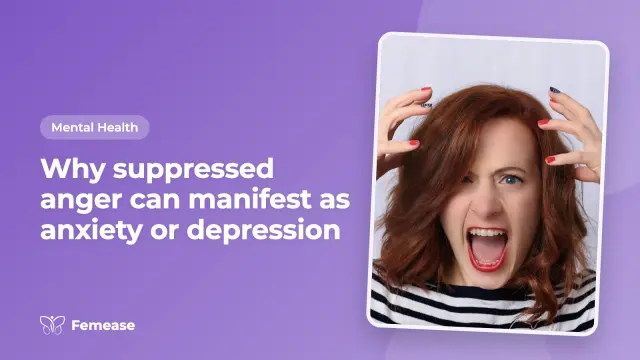
Why suppressed anger can manifest as anxiety or depression
Understanding the hidden link between repressed emotions and mental health.

Navigating hormonal imbalances and mental health
Mood swings, anxiety or low mood? Learn how hormone changes in periods, pregnancy, postpartum and menopause affect mental health, and where to get support.
Self sabotage
Why do I keep getting in my own way? Learn what self-sabotage is, why it happens, from fear of failure to perfectionism, and kind ways to break the cycle.
The disconnect between emotional intelligence and emotional capacity
Why someone emotionally “aware” can still be emotionally unavailable or avoidant.
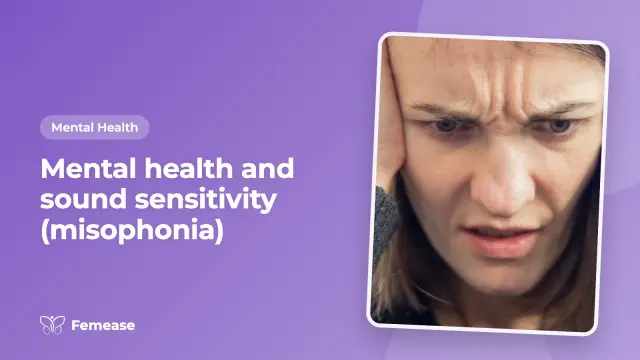
Mental health and sound sensitivity (misophonia)
When everyday sounds trigger rage, panic, or overstimulation, how does it affect relationships?
