How to manage anxiety and stress: what actually helps
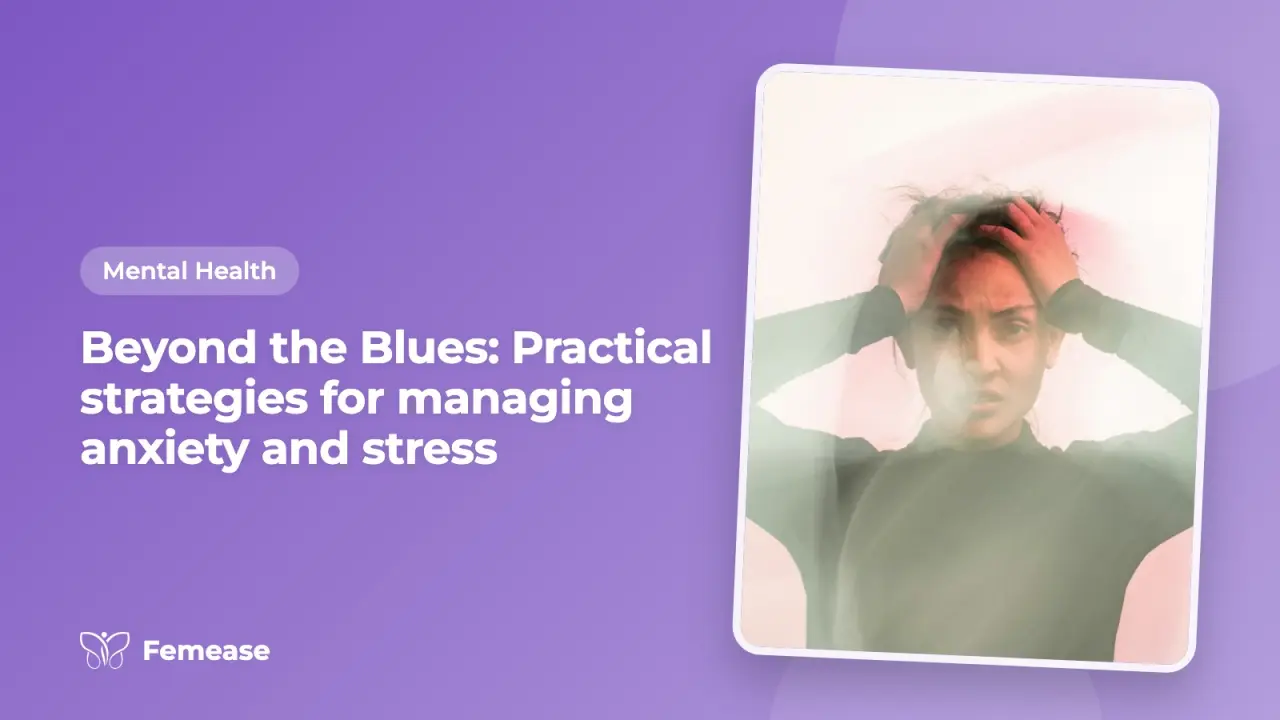
It's 7 a.m., you're packing tiffins, and your heart is already thumping before the day has properly started. Your mind has run through the 9:30 review, the electricity bill due on Friday and your mother's test results twice, and your shoulders are somewhere up near your ears.
A few steady habits can help anxiety and stress ease: moving your body most days, even if it's only a short walk; slow breathing when it builds; a simple plan for the day; time with people you trust; and less alcohol and less news. If it keeps getting in the way of your day, or what you're trying isn't helping, that's the time to get support, and talking therapy is one of the main ways doctors and therapists help with anxiety.
You're not the only one carrying this. WHO estimates that 470 million people lived with an anxiety disorder in 2023, which makes anxiety disorders the most common mental disorders in the world, and girls and women are more likely than boys and men to have one.
How do I know if what I'm feeling is anxiety?
Stress is the pressure of what's in front of you, like the deadline, the guests arriving at six or the exam on Monday. Anxiety is the worry that stays after the thing is over, or turns up before anything has happened at all.
You'll often feel it in your body first, as a faster or more noticeable heartbeat. In your head, it's the worrying about what you said last week or what might go wrong next month. It can also quietly change your route, because you start avoiding the places or situations that set it off, like the crowded Sunday market or the family function you used to enjoy.
That jittery, uneasy feeling (ghabrahat) is often invisible from the outside. Most of us keep packing the tiffins and answering the emails while it hums along underneath, which is partly why it goes unnoticed for so long. An article can't tell you what you have. A doctor or therapist can, by listening to how things have been for you over time.
What can I do in the moment when my heart starts racing?
Try this, in order:
- Stop where you are and put both feet flat on the floor.
- Slow your breathing. Breathe in gently, then let the breath out slower than it came in. Do a few rounds.
- Name five things you can see around you, like the steel tumbler, the calendar on the wall or the crack in the floor tile.
- If it's building into a panic attack, remind yourself that one usually lasts 5 to 20 minutes.
Breathing exercises, mindfulness and meditation help some people calm anxiety, but not everyone. If sitting still with your breath makes you more restless, you haven't failed at it; we've written about why mindfulness doesn't work for everyone.
Which daily habits make the biggest difference to stress?
None of these is dramatic. Think of them as small, regular releases rather than one big overhaul of your life.
Move a little, most days
Regular exercise, even a short walk, is part of looking after yourself when you're anxious, and walking, swimming and yoga can all help you relax. You don't need a gym membership or new shoes. A short walk after dinner counts, and so do two rounds of the colony park or stretching your neck while the pressure cooker whistles.
Give your day a simple shape
A daily schedule can help you use your time well and feel more in control when you're stressed. It doesn't have to be colour-coded. Three lines on the back of an envelope will do.
Back to that tiffin morning for a second. The five minutes after the boxes are packed can be when you write today's three things down, instead of carrying them in your head all the way to the 9:30 review.
When everything feels urgent at once, try a brain dump on paper. Give it ten minutes and write down every worry that's taking up space, without tidying or judging it. Then circle one thing you can act on today and let the rest wait on the page.
Then pick one boundary. Maybe it's not checking work email after 8 p.m., or not saying yes to every request from the school committee. "I can't take that on right now" is a perfectly good sentence, and you don't owe anyone a longer explanation than that.
Stay close to your people
Connecting with others can lift your mood and help you feel less stressed. That might be a phone call to a cousin, chai with the neighbour, or telling one person how you're actually doing instead of "fine, all good". If you'd like to talk with women going through something similar, Femease Circles are small groups for exactly that kind of conversation.
Cut back on what quietly makes it worse
If following the news raises your stress, limit how much of it you take in. Check once in the evening, not every time your phone lights up, and mute the work chat after 9 p.m.
Try not to lean on alcohol or cigarettes to take the edge off, as they can make your mental health worse. If the always-on feeling at work is where most of your stress comes from, how toxic productivity culture fuels anxiety is worth a read.
When is self-help not enough?
If you've been trying these things and they aren't helping, or the stress has gone on for a while and is getting in the way of work, home or looking after yourself, see a doctor. Having symptoms of anxiety is reason enough to get care, and you don't have to wait until it's unbearable.
Cognitive behavioural therapy (CBT) is a kind of talking therapy where you and a therapist look at the patterns in your thoughts and what you do because of them. Talking therapy, especially therapy built on these cognitive behavioural ideas, is one of the main ways doctors and therapists help with anxiety disorders.
Plenty of us never get that far. Worldwide, only about 1 in 4 people who need care for anxiety get any at all. Care for many mental health conditions can be given at relatively low cost, and in India the Tele-MANAS helpline is free to call. If you'd rather start from your own sofa, Femease has therapy sessions with a therapist by video.
If your worry looks like getting everything done while feeling wrung out inside, read about high-functioning anxiety and depression. And if you're running on empty, how burnout differs from depression may help you put a name to it.
When to see a doctor
Get help if:
- what you're trying yourself isn't helping, or you're struggling to cope
- stress or worry has stayed for a while and is affecting your daily life, such as work, home, or looking after yourself or others
- you've started avoiding places, people or situations because of anxiety
- you feel unable to cope or to keep yourself from harm and can't wait to see a doctor: get support urgently, today
In India, Tele-MANAS 14416 is free and open 24x7. If there's any risk to your life, call 112.
You can also see a doctor on Femease through a Doctor consultation by video.
Questions women ask
Can anxiety make my heart race even when nothing is wrong?
Yes, anxiety can make your heartbeat faster or more noticeable. Any new or unusual heart symptom is still worth getting checked, so you're not left guessing about the cause.
How long does a panic attack last?
A panic attack usually lasts between 5 and 20 minutes. Staying where you are and slowing your breathing can help you get through those minutes. If attacks keep coming back, or you've started avoiding places in case one happens, get checked.
Does exercise really help with anxiety?
Regular movement, even a short walk, is one of the simplest self-care steps for anxiety, and walking, swimming and yoga can help you relax. You don't need anything intense. The kind you'll keep doing is the one to pick.
Are women more likely to have anxiety?
Yes, girls and women are more likely than boys and men to have an anxiety disorder. Anxiety disorders can get better with the right support, and talking therapy is one of the main ways doctors and therapists help.
Sources
- Anxiety disorders, World Health Organization, 2026
- Stress, World Health Organization, 2026
- Anxiety, fear and panic, NHS, 2026
- Anxiety, NHS Every Mind Matters, 2026
- Mental health: strengthening our response, World Health Organization, 2026
General information, not medical advice. Talk to a doctor about your own health.
Talk to a therapistKeep reading in the Femease app
Save articles, track your cycle or pregnancy, and talk to a doctor when you need one.
More about mental health
Mindfulness practices to help you manage daily stress
Discover Simple Techniques to Cultivate Awareness and Reduce Anxiety in Your Everyday Life
Why suppressed anger can manifest as anxiety or depression
Understanding the hidden link between repressed emotions and mental health.
High-functioning anxiety and depression
Doing well outside but struggling inside? Learn what high-functioning anxiety and depression look like, why they're hard to talk about, and where to start.
The silent storage of trauma in the body
Uncover how stress, anxiety, and pain can trace back to a dysregulated nervous system, and how to release it with “Somatic Experiencing”
How isolation can dull your senses
Discover how living alone affects your sensory health, and what you can do to stay sharp, connected, and fully alive.
The gut-brain connection
Can food affect your mood? Learn how your gut and brain talk to each other, and how fibre, fewer processed foods and good sleep may support mental health.
